
The gambling suicides myth

The rate of deaths caused by gambling has been foolishly exaggerated

The rate of deaths caused by gambling has been foolishly exaggerated

Artillery Row by Christopher Snowdon May 2024

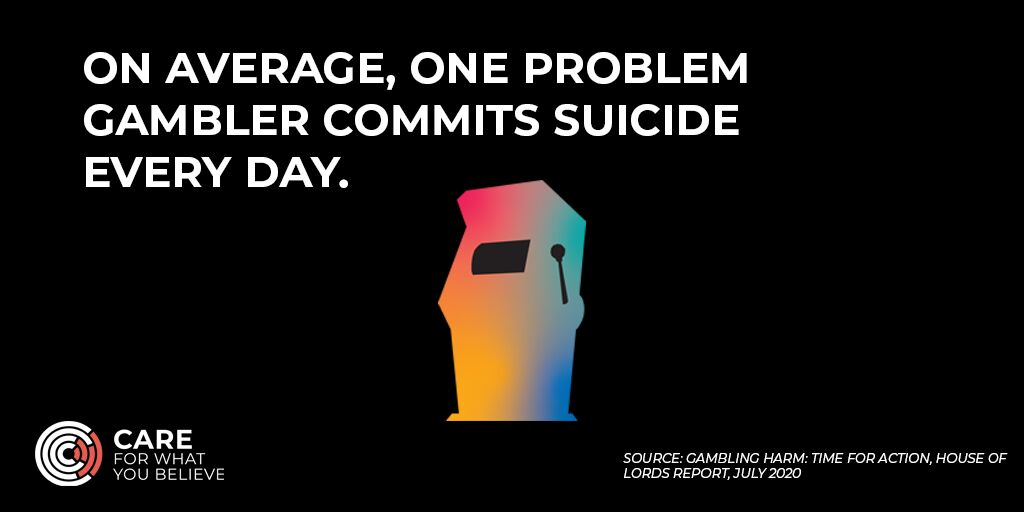
here is one gambling-related suicide in the UK every day. There are up to 496 gambling-related suicides a year. Ten per cent of all the suicides in England are caused by gambling. 

These statistics, and other iterations of them, have become mantras for the anti-gambling lobby since January 2023 when the Office for Health Improvement and Disparities (OHID) published a report claiming that there are “between 117 and 496 suicides associated with problem gambling” in England. Activists naturally focused on the larger of these two numbers and started putting it on billboards. The monetised value of years of life supposedly lost to suicide make up most of the “up to” £1.77 billion that gambling is said to cost “wider society” each year.

It turns out that these figures are based on nothing. They are a will o’ the wisp. A mirage. They exist only on a laptop in Whitehall. They are worthless.

How can we possibly know how many suicides are linked to problem gambling, let alone how many are solely caused by it? Gambling is only mentioned on one coroner’s report a year, on average, which is presumably an under-estimate. In the absence of better evidence, OHID’s predecessor Public Health England turned to a study from Sweden which looked at 2,099 hospital patients who were diagnosed with pathological gambling between 2005 and 2016. Sixty-seven of them died, including 21 who took their own life. The authors noted that the suicide rate among this cohort of pathological gamblers was fifteen times higher than the suicide rate of the general Swedish population. 

Upon this sliver of evidence, everything else rested. In 2021, Public Health England simply estimated how many problem gamblers were in England and then multiplied the number of expected suicides by fifteen. This produced a figure of 409 suicides a year which anti-gambling activists then put on T-shirts

Public Health England was closed down soon afterwards and replaced by OHID. Last January, OHID used the same methodology but produced two different estimates, one based on how many people are thought to have “gambling disorder” (previously known as pathological gambling) and the other based on how many suffer from the less severe condition of “problem gambling”. The figures were 117 and 496 respectively.

You don’t need to be intimately acquainted with basic statistics to see the problem here. People who are being given medical or psychiatric treatment in hospitals are inherently different to people who are not. If you are admitted to hospital, there is already something wrong with you. If you are admitted to hospital and asked to take a survey to diagnose gambling disorder (or any other psychological problem) then you are very likely to be at the higher end of the risk spectrum.

Sure enough, there was a lot wrong with the 2,099 people in the Swedish study. Between 2005 and 2016, 65 per cent of them suffered from “injury, poisoning, and other consequences of external causes”. 60 per cent had an anxiety disorder. 51 per cent suffered from depression. 41 per cent had a substance-use disorder. 29 per cent had an alcohol-use disorder. 19 per cent had a personality disorder. 19 per cent intentionally self-harmed. 12 per cent were bipolar. 9 per cent had schizophrenia. In the context of all this human misery, a suicide rate of one per cent does not seem too surprising and it is absurd to assume that all the suicides were the result of problem gambling. For many of these unfortunate people, gambling may have been the least of their worries.

The authors of the study freely admitted that these hospital patients were unlikely to be representative of the average problem gambler:

It is therefore likely that results may be skewed toward a population of individuals with more severe forms of GD [gambling disorder]. It is likely that this once again implies that this study sample might contain patients with higher mental health comorbidity, as well as individuals with more severe forms of GD, since these individuals are more likely to receive specialized psychiatry care.

Public Health England and OHID ignored all this and extrapolated the suicide rate among pathological gamblers with multiple co-morbidities in Swedish hospitals across the estimated number of problem gamblers in the general population in England. No attempt was made to adjust for the many other risk factors for suicide that these people obviously had. 

Last year, however, one of the two authors of the Swedish study did exactly that. Using the same dataset in a new study for her PhD thesis, Anna Karlsson found that “gambling disorder did not appear to be a significant risk factor for the increase in suicide and general mortality when controlling for previously known risk factors”. She concluded that her research “could not determine whether GD [gambling disorder] is an independent risk factor for suicide”.

This does not mean that there is no link between gambling disorder and suicide. History and common sense tell us that people who get into severe financial difficulties are more likely to take their own lives and it is obvious that problem gambling is one way to suffer financial distress, albeit the only one that is now treated as a “public health” issue. What it does mean is that gambling disorder, on its own, was not a big enough risk factor for suicide to show up among the people studied by the Swedish authors using standard statistical practice. If you extrapolated the properly adjusted figures from the Swedish study across the English population, the number of gambling-related suicides would be zero.

It is hard to believe that OHID was not aware that it had made an error that a literal schoolboy could have spotted. Public Health England was closed down because it was incompetent and was too easily distracted by lifestyle issues when it should have been focusing on public health. It was more of an in-house lobby group than a serious scientific agency. It seems that closing it down and re-opening it under a new name with the same staff was not enough to make the leopard change its spots.

The Great Suicide Deception – Part IV – What purpose is served by spurious statistics?

Dan Waugh-Regulus Partners May 2024

This is the fourth and final article in our series on attempts by state bodies to claim widespread suicide mortality associated with problem gambling. In the first three articles we demonstrated why estimates prepared by Public Health England and the Office for Health Improvement and Disparities were irretrievably flawed; we examined the conduct of PHE and OHID, including evidence of bias and inappropriate behaviour; and we considered the role played by the Gambling Commission, the Advisory Board for Safer Gambling and others in either propagating the PHE-OHID claims or withholding concerns about their reliability. We conclude by addressing the wisdom of attempts to boil down a matter as complex as suicide to any single factor.

It has long been understood that people with gambling disorder are at elevated risk of death by suicide. The DSM-5 (the American Psychiatric Association’s ‘bible’) comments on elevated rates of suicide ideation and attempts among people in treatment for gambling disorder (and makes similar observations in relation to a large number of other mental health conditions, including alcohol use disorder). Concerns in relation to gambling disorder and self-harm – and what might be done to prevent suicide by people with the disorder – are entirely valid.

It is also widely accepted that suicidality is a complex matter. In their 2016 meta-analysis of 50 years of suicide research, Franklin et al. made the following observation: 

“…any individual with nearly any type of mental illness (i.e. internalizing, externalizing, psychotic, or personality disorder symptoms), serious or chronic physical illness, life stress (e.g. social, occupational, or legal problem), special population status (e.g. migrant, prisoner, nonheterosexual), or access to lethal means (e.g. firearms, drugs, high places) may be at risk for [suicidal behaviours and thoughts]. A large proportion of the population possess at least one of these risk factors at any given time, with many people possessing multiple factors.”   

Understanding that people with a gambling disorder are at elevated risk of suicide is helpful when it comes to devising self-harm prevention strategies. For example, Hakansson & Karlsson (the Swedish researchers relied upon by PHE-OHID) conclude their 2020 study with the following recommendation:

“The findings call for improved screening and treatment interventions for patients with gambling disorder and other mental health comorbidity.”

It is questionable however whether studies of discrete associations between any single activity or human characteristic and death by suicide should – by themselves – be used to justify state controls on that activity.  By way of illustration, a 2021 study on the prevalence of suicidal behaviour in a group of patients with behavioural addictions (Valenciano-Mendoza et al.) found: 

“the highest prevalence of suicide attempts was registered for sex addiction (9.1%), followed by buying–shopping disorder (7.6%), gambling disorder (6.7%), and gaming disorder (3.0%).”

These findings may be useful for addressing risk of self-harm within population groups suffering from these mental health conditions. They do not – by themselves – justify bans on sex, shopping or playing video games. A 2017 study of young adults in England (aged 20-24 years, n=106) by Appleby et al., found that four deaths by suicide were linked to ‘gambling problems’; and this has been used to suggest that 250 deaths by suicide each year are ‘gambling-related’. The study also found that 44 of those who had died “had a reported history of excessive alcohol use. Illicit drug use was reported in 54 (51%)”; sevenwere reported as experiencing problems related to being a student” (including five experiencing “academic pressures”. One might therefore estimate (using the same methodology as for gambling problems) that around 3,200 suicides are related to illicit drug use; 2,625 to excessive alcohol use; and 440 to academia. Such findings should prompt concern and policy responses; but it is questionable whether these should extend – for example – to complete bans on advertisements for beer or universities.

Some activists have called for coroners to assess, as a matter of routine, the possible involvement of gambling in deaths under investigation – the Bishop of St Albans has doggedly pursued a Private Members Bill to mandate this. At first blush it seems to be a reasonable suggestion. The problem is that it places an additional requirement on already over-burdened coroners; and risks distortion if other known factors are not also investigated with the same degree of rigour. The presence of Adverse Childhood Experiences (‘ACEs’) is a well-documented antecedent of suicide with one study (Dube et al., 2001) finding that as many as 80% of suicide cases analysed had a history of ACEs. There are also well-documented associations between relationship breakdown and self-harm. The practicality and wisdom of asking coroners to probe into every corner of the deceased’s life should be carefully considered.

Those determined to produce figures on the prevalence of gambling-related suicide should first set out a clear operationalised definition of what this term means. How is the relationship to be characterised (e.g. does the individual need to have gambled in the prior 12 months? Does he or she need to have a diagnosis of gambling disorder?) and to what extent is there evidence of causal contribution to death (e.g. was gambling disorder a significant factor or a minor factor?). Finally, they should be required to contextualise their findings by reference to other risk factors.

Running through some of the institutional responses to PHE-OHID is the idea that unreliable estimates of mortality serve a valid purpose pending the production of more robust statistics – something along the lines of ‘fake it until you can make it’. The chair of the Gambling Commission’s Advisory Board for Safer Gambling (‘ABSG’), Dr Anna van der Gaag, for example has written that: 

“Good research, especially if it is on an under-researched area like this one, tends to begin and end in a different place, prompting challenge, replication, debate, and the research in this important area is no different.”

It is a view that overlooks four important points. First, the PHE-OHID work on the cost of gambling harms is riven with errors (including mathematical mistakes) and should not be considered “good research”. Second, the ABSG specifically called for “action” as a result of the PHE estimates – with no suggestion of the need for caution or refinement. Third, rather than welcoming challenge, the ABSG has engaged in ad hominem disparagement of those attempting to apply scrutiny to the PHE-OHID claims (likening this, without substantiation, to the activities of Big Oil). Fourth, it is questionable how far we should trust ‘better research’ if those responsible for it have propagated or tolerated misinformation in the past. As we saw during the Covid pandemic, the production of misleading statistics may in fact set back the cause of harm prevention by undermining trust in authority. 

Suicide risk among people with a gambling disorder is a legitimate issue and warrants an intelligent response; but this is unlikely to be achieved through the publication of spurious estimates of prevalence. As the US economist, Professor Douglas Walker has observed; 

“If researchers continue to offer social cost estimates, they should estimate costs that are measurable. But for other costs such as psychic costs that cannot be measured…let us identify them without providing spurious empirical estimates. Offering methodologically flawed cost estimates does not improve our understanding nor does it promote sound policy…In areas where research is still quite primitive, perhaps no data would be better than flawed data.”

Coda

We are aware that some individuals and organisations will resent this series of articles on PHE-OHID (not least the OHID researchers themselves). Our intention in writing them has not been to hurt or insult – but to shine a light on the way that some statistics are created and the distortive effect that ‘bad statistics’ can have on government policies. The application of scrutiny to research is an important part of the scientific process; and where state bodies are concerned, an important part of the democratic process too. It is entirely consistent to be concerned about a particular issue (e.g. risk of self-harm in a gambling context) and at the same time to believe that research into that issue should be conducted with honesty, openness and in accordance with scientific principles. In this way, we may hope to reduce the stigma associated with self-harm (such that gambling firms and other businesses gain the confidence to openly confront it); and that, over time, we may apply greater intelligence to the prevention of suicide in a gambling context and more generally.