
Sample Bias – the new normal

 
Great Britain: Regulation – Is the Great British Gambling Debate heading for a Terminal solution?


Last week’s House of Lords debate on gambling advertising was in many respects the same tired old combination of mistruths and moral indignation; but it was notable for providing a glimpse into the next phase of gambling policy discourse in Britain. Lord Foster of Bath, who instigated the short debate told the House that:
 
“I suspect public concern is about to rise because, in July, the Gambling Commission will release new figures about gambling harm. The Gambling Minister in the other place has already indicated that they are likely to show that 1.3 million people will classify as ‘problem gamblers’ and that a further 6 million are at risk. If confirmed, these figures are far higher than those used to inform the Government’s work on their White Paper. This is a real cause for concern, further strengthening the call for action.”


The intent could not be clearer. If the publication of the Gambling Survey for Great Britain (‘GSGB’) in July reveals a markedly higher rate of ‘problem gambling’ than the estimates relied upon by the Government in its White Paper, then the wisdom of the policies contained therein will be open to question. Lord Foster’s point is a fair one. In its White Paper, the Government relied on the 2018 Health Survey for England, which reported a ‘problem gambling’ prevalence rate of 0.38%; and the current Official Statistic (from the HSE 2021) is 0.25%. The Final Experimental Stage of the GSGB reported a figure of 2.5% – between six and ten times higher than the HSE. If the Government and regulator are confident that results obtained from the GSGB are reliable, concern groups will justifiably ask for a re-run of certain policy decisions (and possibly even Judicial Review, given the litigious bent of some activists).
 
The problem is, of course, that the Gambling Commission does not appear to be at all confident that results obtained from the GSGB will be reliable. Each of the new survey’s iterations – from the Pilot Survey in 2022 to the Experimental Stages in 2023 to Wave 1 of the official survey in 2024 – has revealed signs of sample bias. In an independent review (‘independently’ funded by the Gambling Commission), Professor Patick Sturgis of the London School of Economics, commented on the “non-negligible risk” that the GSGB would “substantially over-state the true level of gambling and gambling harm in the population”. He also urged caution, warning that “until there is a better understanding of the errors affecting the new survey’s estimates of the prevalence of gambling and gambling harm, policy-makers must treat them with due caution.” Such advice appears lost on the Commission (which prefers to gloss over inconvenient opinions). In addition to rates of ‘problem’ and ‘at risk’ gambling’, it plans to release survey findings in respect of suicidality, violence and abuse, mental ill-health and use of food banks – in the knowledge that the figures may very well be incorrect and misleading. Just when the Department for Culture, Media and Sport might have thought it was nearing the end of a long and tortuous journey on gambling reform, the Commission is throwing down new track.
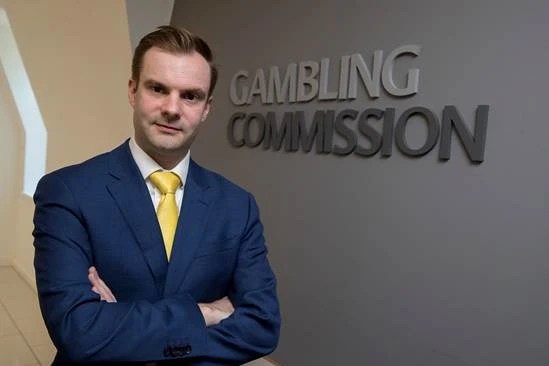

 
The threat to the licensed betting and gaming market in Great Britain is severe. The public health establishment (including senior figures within the Department for Health and Social Care) has signalled its intention to “tackle gambling” (all gambling and not just harmful gambling) in the same way that it has dealt with tobacco smoking. Demands for total bans on advertising (including at racecourses), the sale of beer and wine in bingo clubs and casinos and the imposition of ‘plain packaging’ for all gambling products (no colours, logos or images – farewell Queen of Hearts), will intensify. In Scotland, it is reported that the SNP plans to raise the legal age of gambling if it achieves independence (presumably with a carve out for anti-gambling vitriol in its Hate Speech legislation) but this is only a stop along the route rather than a final destination. It is far from obvious however, that the industry realises the perilous nature of its current position. Tone-deaf advertising on bus stops and at railway stations only strengthens the ground for those seeking a terminal solution.

In the hands of a narcissist.

The latest from Regulus partners

 
Great Britain: Regulation – The Invisible Hand of Gambling Market Regulation 
Some years ago, Britain’s Gambling Commission announced that it had banned the term ‘responsible gambling’. At the time it seemed like an odd move. Notwithstanding legitimate concerns about the misuse of ‘responsible gambling’ by some licensees (see for example, http://regulusp.blogspot.com/2014/11/the-recklessness-of-gambling-responsibly.html), there is generally something a little unsettling about state agencies censoring language.  
 
Based on recent statements, one could be forgiven for thinking that the concept of responsible regulation might also have had its day. In an interview for the Smart Betting Club, GB Gambling Commission CEO, Andrew Rhodes appeared to wash his organisation’s hands of any responsibility for devising affordability checks; claiming that the current informal regime is the result of licensees reacting to enforcement cases rather than regulatory diktat. The theory of ‘spontaneous adoption’ however requires us to overlook the fact that in 2020, the Commission warned licensees that: “customers wishing to spend more than the national average should be asked to provide information to support a higher affordability trigger such as three months’ payslips, P60s, tax returns or bank statements which will both inform the affordability level the customer may believe appropriate with objective evidence whilst enabling the licensee to have better insight into the source of those funds and whether they are legitimate or not.”
 
Mr Rhodes’s assurance that the Government does not want gamblers to produce payslips might be more convincing if it were not for the fact that this is precisely what the Gambling Commission has demanded of them. During the podcast, he described plans for financial risk checks and financial vulnerability assessments as Government policy, which the regulator has been asked to execute. This much is true; but it is also the case that the Commission has been the principal architect of that policy. Rhodes suggested that the Commission’s own plans for checks had been overtaken by the Government’s review of the Gambling Act, stating that: “a lot of people were saying that this is a really big policy topic and it’s really a matter for the White Paper – the Gambling Commission shouldn’t be trying to address this. And we agreed.” The fact is however, that when the Commission launched its call for evidence on affordability checks in November 2020, it did so in the full knowledge that the Government’s own review was imminent. Papers released under the Freedom of Information Act show that the Commission had originally expected the DCMS call for evidence in October – a month before its own was launched. Its refusal to publish the results – including the views of 12,125 individuals (understood to be mainly customers) – cannot be justified by reference to the White Paper alone. The Commission’s view that there is “no outstanding public interest” in releasing the information (1,169 days later and counting) is unlikely to be shared by those who took the trouble to respond.


Mr Rhodes also confirmed his expectation that “the black market in the UK will grow because it is being targeted” by unlicensed operators. There was little recognition however, of the contribution – positive or negative – of market rules to the creation of conditions in which illegal activity expands, rather like governments printing money and then blaming commodity prices for inflation. He also claimed that coverage of black-market issues by the Racing Post had been not “entirely helpful” – but it wasn’t clear what this was intended to convey. One possible interpretation is that the RP’s coverage may itself have encouraged bettors to use unlicensed bookmakers – a claim that requires substantiation if it is to be advanced (we stress that we do not know what Mr Rhodes meant by the remark; merely that this is one reasonable interpretation).
 
Andrew Rhodes cuts an increasingly frustrated figure these days – often giving the impression that everything would be fine if only people could be made to understand.  He deserves credit for agreeing to take part in the SBC podcast. Engagement with a wide range of stakeholders is an essential ingredient of good market regulation. For it to be meaningful however, engagement requires a willingness to deal frankly with difficult issues, even if this involves occasional admission of responsibility or fallibility. To err is human; to evade is political. If the Government really wishes to sort out the mess of affordability checks, it should initiate a review to identify how the current system came into being and what the effects have been (in terms of harm prevention, consumer behaviour, law-breaking and market functioning). The truth is that a series of pilot schemes for affordability checks has been running for several years now. The effects of this programme should be independently assessed and evaluated – but this seems unlikely to take place. The lack of curiosity from officialdom about the origins and effects of affordability checks is telling.
 
Watch the podcast here: https://youtu.be/WnGvzO7F0pw?si=bSl_3LBWBCq8SvuH