
More than a decade ago, I sat down to lunch with the eminently amiable Simon Bazelgette. At the time one of the decision makers in the s[port, as leader of Jockey Club Racecourses. My online business was fledgling, years behind 365, I spent my time with reasonable prominence on racetracks with good pitches, and laying bets others would not. My interest lay in attendances at racetracks
He told me of their plans to bolster what was a successful sport, with concerts. The unspoken master plan involved a lake of beer.

For a while, the plan seemed to work. Top acts were booked, and given this was all new territory, their rates were affordable. Racetrack sales grew, alcohol seemed a happy marriage as Bazelgette’s argument was tracks needed to ‘evolve’ to become more of a leisure day out, than a sport. Not that he associated alcohol sales in conversation
Over the years, the top acts, other than legacy performers well past their sell by, like Tom Jones and Rod Stewart, raised their rates, and the maths started to bite. A clear example was Epsom (I might refer to this old Dame a few times) which booked concerts by acts most regular attendees of tracks had never heard of, and put on six class 6 races for pocket money. Yes, you heard that right, whilst claiming the practice was to encourage fans into the sport, they often afforded exceptionally poor racing. Being Epsom, some of the field sizes were miserable. But the track was busier than ever, and profitable for a change. All seemed good in the world of racing. The formula was taken up across the sport
There were downsides, but these seemed trivial when a night meeting at HQ could draw in 15,000, and beer sales were impressive. As were the vital corporate boxes. For example what were the views of their older core membership to seeing the racing programme often dumbed down? Did they relish sharing their sport with large groups of young men and women, too drunk to stand by the third race? A category of spenders were sold members enclosure tickets.
Bazelgette told me ‘racing entrance charges are favourable against football’
But Simon should know, as every racetrack should, racing is 90% downtime – filling empty space rather than a seat, and often features a rather poor betting only product. Football is 100% action. Even cricket beats Racing comfortably in said regard. So if your leisure product is simply beer- it better be a superb environment to keep people entertained for 4 hours!
Worst of all, the brigades of sockless wonders brought aggression to the sport. Fights at venues like Epsom, Ascot and Newmarket were constant. I witnessed many of them personally, as I am sure we all have. The regulator of the sport, the BHA, looked on impassively. It never sanctioned a single racetrack for their failures to deliver a safe, fight free environment for all. One would have imagined social responsibility to be the domain of the regulator, but fat chance when BHA executives are selected by racetracks

Drugs were rife too, with queues for cubicles at toilets on a biblical scale. Children were actively discouraged from attending at tracks like Epsom by pricing policies of full adult rate for a child. It was as cynical, as it was short sighted. A decision without question because the track executive considered the environment as simply too toxic for the young. And i wouldn’t disagree! I watched huge enterprises like Ascot, the Kings racetrack, throw its effluence casually out onto the local community at 6 o clock, without mind of the consequences, nor the effect on the local community
This was the business plan for racetracks, but not the sport. Of course it all came to a grinding halt when the rates for bands became untenable. Although the beer sales remained. At some formerly impressive tracks I’ve seen beer machines spring up. I mean, I ask you what socially responsible business does that? What kind of culture are you trying to create when a pint of beer is sold by a machine, and overpriced champagne is served in a plastic beaker? Aren’t you trying to create a civilised, cultured environment? Who is governing who gets a drink, or when is enough? Perhaps a student attendant at best. Coffee, the highly popular staple diet of high streets across the country, has never been taken up properly by track execs. It can take several minutes to make a coffee, just seconds to pull a pint. It boils down to money over service standards
Finally, as far as racetracks are concerned, there’s the cynical pricing practices. Charging the maximum for meetings which appeal only to betting. Racegoers finding bars and restaurants closed. How some tracks can charge £120 for a bottle of champagne – served in a plastic cup, on cheap tables, whilst the same bottle in York costs half that amount? Car parking charges are excessive. No track is exempt from criticism here. The food on racetracks – outside the private boxes is notorious. What would tracks do without vans serving chips? There used to be an excellent sweetie van at Ascot, run by people who have provided such a service for years at many racetracks. It’s been replaced by a dismal track equivalence. Why? Because new management have decided it to be more profitable in house. The service angle has been shelved in importance. The same people no longer serve Goodwood. Why? Because they can’t afford the rates. Now noone offers that essential service, with such panache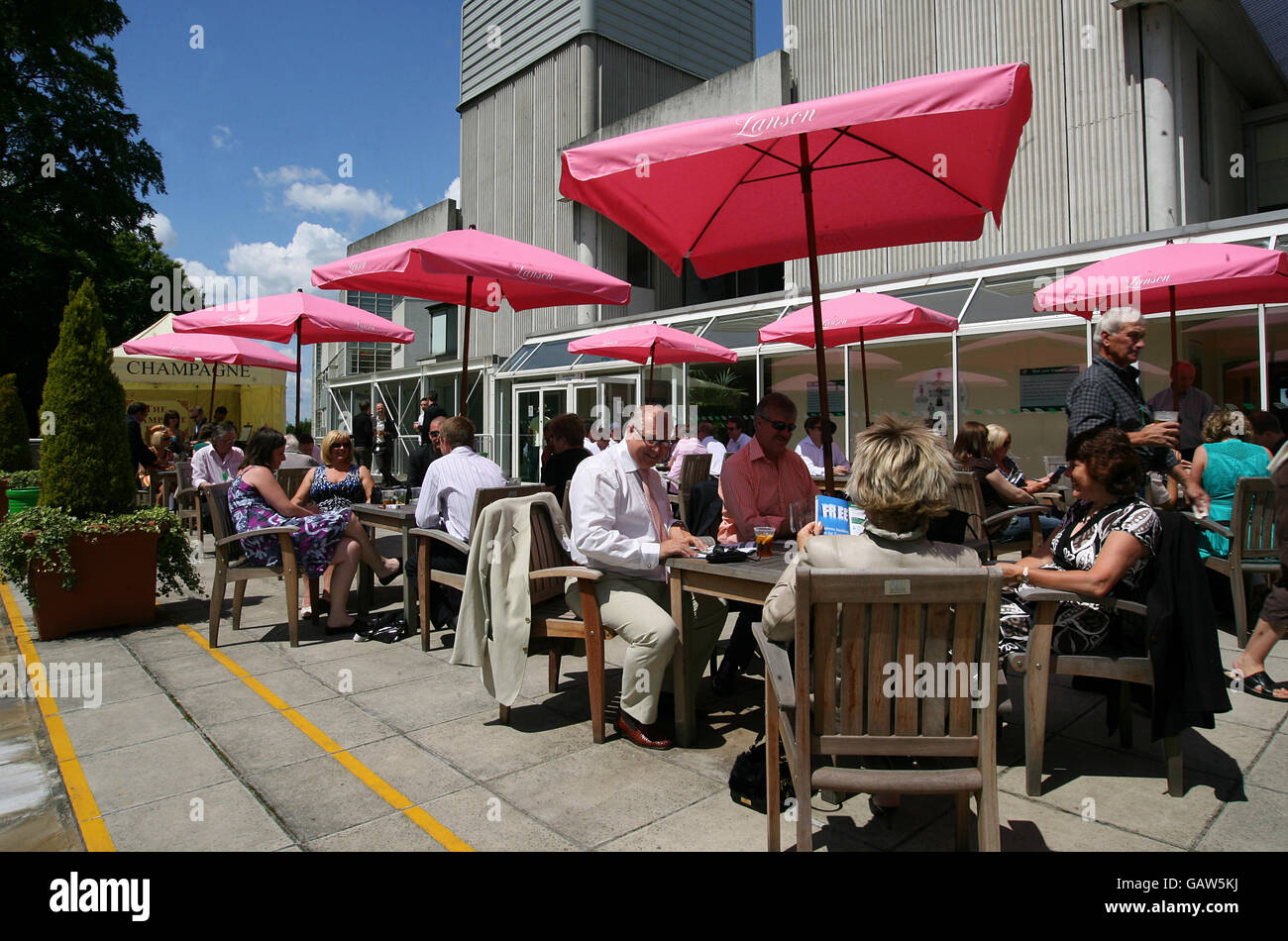
Tracks have gone cashless, often refusing to countenance any cash sales, from punters who arrive at the track with cash only for bookies, and who, when they win, cannot spend it at the venue. This kind of management is child-like. The current estimate of cash circulating in society is 82 billion. And the tracks have decided they don’t want any of it? It is an astonishing fail. Me? I’d take green shield stamps..
Cash is legal tender, and if you’re not going to take it, make it clear when people buy a ticket that you refuse to accept the paper.
In the simplest terms possible, racetrack executives have markedly contributed to their own downfall. With cynical pricing practices and quite often severely run down racetracks, lacking appreciable investment
One final point, I think racetracks appear to have missed. They’ve become almost universally unpopular with their patrons. Few letters appear which glorify the experience. Few articles laud racetracks for service, value or customer experience. And noone likes their attitudes to social responsibility. In said regard they rival ‘big corp’ bookmakers for popularity. With few exceptions.
For two decades almost, I have railed against the practice of breeding in the sport. Let me give a topical example, – City Of Troy. A rather in an out character, with sour performances in the Eclipse and the 2000gns. In between which, on going days, he can be endlessly impressive. The general public, and more importantly the racing crowd, have started to associate with this new star. Bolstered by plaudits ‘best i have ever trained’ from the very likeable, and hard working Aiden O Brien. He could sell me windows any day, training is just his day job. They were even afforded a racetrack gallop at Southwell, the performance enhancing element for which was unclear, since its characteristics against Del Mar, California, appeared only to be the running rail. I mean if you want a racetrack gallop – and you live in Ireland- Dundalk is just up the road.
What it was, however, was a giant sales pitch. City ‘raced’ against some of the worst horses in the AOB yard, and duly ran away. A visual display. A clever marketing ploy to up the price of breeding to those interested. Given it was covered by many racing journalists and television, it was an enterprising move, rewarded with coverage far beyond its worth
I think we all know if City Of Troy wins in Del Mar, that we will hear he is to be retired. At best, this performer won’t make it on a racetrack to 5 years. And this is the true cancer in the sport. Horses carted off to stud far too early in their careers. It is indeed a rarity for anything winning France’s Arc to continue on. The call of a lucrative career making other racehorses far too compelling. Tattersalls book 1 registered a staggering 134 million in sales this October. An absurd figure for an auction notorious for delivering on failure for the majority of purchases. Could there be a bigger bubble?

Troy will yield an impressive purse at stud, far more gained in a month than could in a career as an actual race horse, entertaining the general public. And this, my friends, is where the real money in racing is. Not actually racing.
Breeders will argue, and some may agree, that his progeny will entertain racing fans for a decade. That argument, however, falls entirely flat when you look at what draws in fans to other sports. Lionel Messi has been entertaining football fans for more than a decade. Joe Montana did the same in the NFL, and Johnny Sexton wowed rugby fans until his body gave out. Racing farms its best out to barns in a naked exercise in cash creation
This is what brings people to sport. In tangent with an ability to adapt. Cricket is the best example of that, introducing twenty twenty slogs, and 50 over games to afford fans the one day bash they craved. They still keep the 5 day borefest of course, for the aficionados, but attendances are modest. The NFL routinely changes its laws and rules, ensuring every team across the nation has a chance at the Superbowl. Dallas used to dominate, now they’re a mid table performer. The system of capping and drafts arresting billionaires from buying their way to enduring success
And whilst other sports have been improving their offering? The BHA have been watering down its fare. Banning hard pressed jockeys for obvious errors, a clear violation of their human rights. Low sun meriting bumper races. A massive dumbing down of National Hunt fences, the leading example of this would be the sport’s shop window. The Grand National

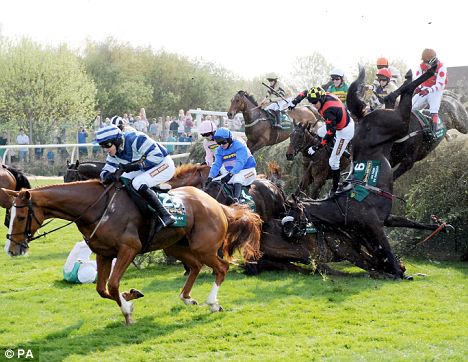
Now I do understand that for a decade animal rights campaigners have hung around Aintree, peddling their views. They should be easy to counter, over 90 percent of the animals they ‘save’ are euthanized! Any attempt to ban racing would amount to the biggest cull in the horse ever undertaken, and critically the RSPCA sees no issue with horse care. In the last few years, Aintree has experienced more horse deaths in the National than in the entire decade of the 60’s. It seems to me that speed kills with far more effectiveness than the height or stiffness at fences. Look at Cheltenham’s 3rd last, now removed. It was rightly accepted that with the downhill nature of the fence, the tiring horse being asked for extra effort, led to fatalities. Nick Rust decided it was all about height, and the latest industry patsy, Julie Harrington, without doubt the most ineffectual leader the sport has ever engaged, it was also about how many actually took part.
The clear and indisputable result was a race where over 4.5 miles, not a single horse fell. Not one. And in previous years I watched the same farce being played out with the number of finishers determined by those who pulled up.
The shop window has seen a huge decline, despite an attractive time slot, in the number of people watching the race. A nod to animal rights- has become the sports headstone, indeed they’ve created a monster. Hearts in their mouths every year-and with the inevitable spectre of future horse fatalities, will require another response. That’s how appeasement works.
Some folk in racing are waking up to the third issue. Trainers. The sport is ruled by a miniscule posse of top trainers. The aforementioned O’Brien, dominates the flat, and has become so powerful he can openly flout the rules of the sport, employing team tactics for example, to ensure his stars have the ideal pace and running line. Horses with best form at 7 furlongs sent out in Irish Derbys to provide the best environment for other horses in the stable. O’Brien may be breaking the rules, but he’s not doing anything wrong. Why? Because it is condoned by the authorities, and therefore he has cleverly made it legal.
The Irish racing regulator, Horse Racing Ireland came up with a novel plan to limit just 60 races in its programme to trainers who had fewer than 50 Irish Hunt winners. There were endless good reasons for such a plan, if you want to reduce the power of Mullins and Elliott, and to a lesser extent the likes of De Bromhead and Cromwell, from winning everything meaningful. It is precisely why other sports employ salary caps. Such dominance in any sport is deeply unhealthy, and pressurises small trainers out of business. Mullins, for example, can withdraw his horses from a particular meeting and the bottom drops out of all interest. These 4 trainers were rumoured to be considering legal action, to protect their dominance, which merely serves to illustrate how self serving they are
Add that to the endlessly ruinous practices of other horse husbanders, like Nicky Henderson, withdrawing top stars from races at the eleventh hour, with a range of spurious excuses. Without due care for those who have bought a ticket. It is about Seven Barrows, rather than the National Hunt, and I’m afraid that’s as unacceptable as Manchester City deciding not to play its best players, because the opposition might be a bit stiff
Both the BHA, and Horse Racing Ireland have afforded trainers luxuriant opportunities to gain coveted black type. This has several major benefits to owners, breeders, trainers – but not the tracks. Naturally a row of often cheaply gained graded wins raises the profile, price and stud fees, and racetracks see offering graded events as important to attendance. Such has become somewhat of a millstone. Racing channels, pundits, hacks can all laud the performances of horses like Constitution Hill, but they are gained at the expense of competitive racing. I struggle to understand the eye watering fawning over such performances, when those who could make the race of merit to fans and television are boxed up and sent elsewhere. Ultimately, however, the practice has hit the sport hard, with a marked decline in attendance. Aficionados can glorify group races like the Eclipse, Goodwood Cup or Champion Hurdle – but they remain utterly meaningless in terms of competitive fare, and for the betting public at racetracks? An irrelevance
Racing is not helped by its inward looking approach. Too many decisions involve self interest, the views of John Gosden, the tracks themselves, or the breeding community. Racing’s hierarchy is drawn from the sport almost exclusively and there are precious few new ideas. Attempts at change are derided as unnecessary – or even face legal challenge. Either that culture changes or the next generation could be looking at a severely diminished sport. 
Affordability checks in the gambling medium can only negatively impact racing coffers. I understand the reaction of the tracks will be to run to government to renegotiate what they earn from bookmakers. This has always been just so. It is a poor business practice, however, to refuse to accept the sport has declined in interest and competitiveness, and not to care that bookmaker returns in an expensive sport to operate are borderline, and racing’s most important stakeholders – punters, are fast losing interest in betting on the sport. They would rather bet on the slots, according to the latest set of financials from the GC.
Black type should be at a premium. Everything that can be done to increase competitiveness and participation must be addressed. Racetracks need to stop treating the sport as a by product to their publican tendencies. Prices cannot rival football, because racing isn’t as good as football. And the practice of breeding has to be robustly challenged with measures designed to make it a lot more difficult for horses to line up a row of 1s. The sport isn’t about 10 trainers.
Most sports would have woken up to its issues and taken full ownership a long time before now. In simple terms our decision makers view the sport from the corporate box, and show no understanding of why people are voting with their feet elsewhere
When racing was threatened by the prospect of a massive drop in income with the gambling commission’s utterly futile affordability checks on punters, a petition was taken up to get Parliament to debate the matter further. I recall it took nearly two weeks to gain 100,000 signatures. A sport with at least that number of people who depend on it for employment or business struggled to muster support. Why? Because the air of snobbish indifference to those who bet on the product came to the fore. The idea what is good for a bookmaker as good for the sport, not an ideal they care to support. Which highlighted a patent lack of understanding how the sport is financed by many. I have had many conversations with people in the sport who simply do not understand how dependent they are on betting! Punters themselves have felt entirely disenfranchised by association with racing. Overcharged when they attend for a very poor sporting product. Treated poorly by big betting corporations, and ignored by the authorities such as the BHA and gambling commission. The latter who actively punishes them for transgressions by major betting giants. Not difficult to see their indifference.
If racing is to get through this crisis, it simply needs a new authority. Which isn’t hired by the sport. Given free rein to sweep through changes. Punish racetracks for social failures and inadequate facilities. Enough of vanity Group 1s like Saturday’s Dewhurst. 5 ran- 2 owners. Weighed in. And the breeders? Well, they are racing’s true enemy. Forcing lesser owners out of association and robbing the sport callously of its stars as juveniles. Think that’s an extremist view? Well, tell me in November where to find City Of Troy.



 Geoff Banks Online Reports