
from Dan Waugh
Partner at Regulus Partners. Writes about the regulation of gambling markets
Jumping the Shark?
Britain’s Gambling Commission is shredding its credibility on the blade of Occam’s Razor
The law of Occam’s Razor states that the simplest explanation for any problem is usually the best one. The Gambling Commission’s tortured defence of its Young People and Gambling Survey (‘YPGS’), suggests that it is no fan of Occam or his barbering. If it had not done so already, Britain’s embattled gambling regulator has finally ‘jumped the shark’, stooping to absurdity to defend its statistics. Any return to happy days will be contingent on rediscovering the ability to come clean.
On 19th August this year, I wrote to the Gambling Commission to highlight three findings from the YPGS that appeared implausible, inconsistent and just plain impossible.
· First, I demonstrated that a non-trivial proportion of children classified as ‘problem gamblers’ reported fantastical levels of participation in betting and gaming, with some claiming to take part in all 17 different licensed and non-licensed activities in the space of the preceding seven days.
· Second, I showed that another meaningful proportion of the survey’s ‘problem gamblers’ reported only very low-level gambling on non-age restricted forms or traditional lottery draws; and questioned whether this was consistent with the harms they reported.
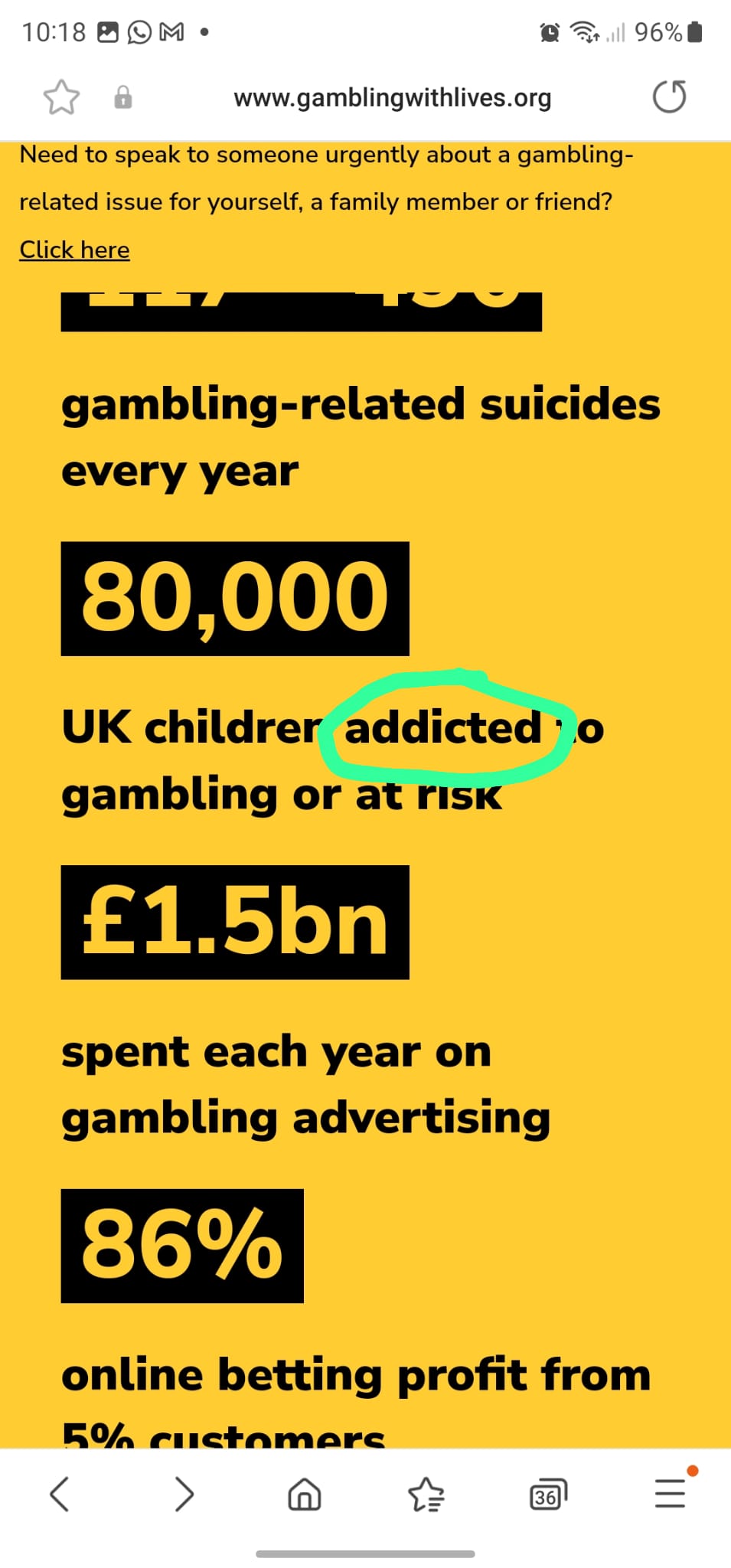
· Third, I highlighted the fact that most of the children who claimed that adverts had prompted them to gamble also reported no participation in gambling at all.
I contended therefore that, over the course of many years, YPGS results had been misrepresented within public policy discourse and that significant doubt must attend the survey’s reliability. This critique suggested that online questionnaires about gambling, completed by adolescent boys and girls in a classroom setting, might not always yield unimpeachably honest or accurate responses.
Today, the Gambling Commission has published its response. It seems to have acknowledged the accuracy of the analyses and conceded – with considerable understatement – that more might have been done to contextualise survey findings (to explain, for example, that the survey data do not in fact show a strong connection between exposure to advertising and underage gambling). The Commission rejected however, any suggestion that the findings identified might cast doubt on the underlying reliability of its survey. Instead, it argued the following:
· While some might consider it implausible that 12-year-old children regularly spend their own money on 17 distinct types of gambling in a single week, there is no actual reason to believe this is untrue.
· That buying a ticket (or tickets) for the National Lottery at some point in the prior month or playing bingo at a holiday park or social club at some point in the prior year can – by themselves – cause problem gambling; and may result in (among other things) truancy from school, loss-chasing, loss of control and ‘illegal acts’.
· That the children in the survey who claimed to have been prompted to spend their own money on gambling were merely reporting ‘feelings’ of being prompted rather than actual gambling; and that, contrary to public health depictions, the survey question does not seek to establish a causal link between exposure to advertising and gambling.
The first and second of these defences raise questions about the Gambling Commission’s judgement. The third, however, is the most interesting. In assessing the credibility of the regulator’s position, it is helpful to remind ourselves of the precise wording of the ‘prompted to gamble’ question in the YPGS:
“Have adverts or promotion about gambling ever prompted you to spend money on gambling when you were not otherwise planning to?”
The Commission’s claim that this question is intended to identify feelings rather than actual gambling is a post-hoc invention. The survey does not ask whether the children have had ‘feelings’ of being prompted to gamble; but whether they have in fact spent money on unplanned gambling. To suggest otherwise is casuistry, ill-befitting a public body. The statistic has been regularly used to allege that adverts cause children to gamble, as the following examples show:
· In 2019, Professor Heather Wardle, now the head of the UK’s Gambling Harms Research Centre and colleagues told the House of Lords Gambling Industry Inquiry (citing the YPGS) that, “approximately 200,000 children aged 11-16 gambled as a result of advertising, marketing or sponsorship exposure.”
· In 2025, in his evidence to the House of Lords Liaison Committee Inquiry on Gambling Advertising, Dr Matt Gaskell, who leads the NHS Northern Gambling Service, observed that 7% of children who reported exposure to gambling advertisements, “said that advertising led to unplanned gambling spend.”
· In 2023, the Gambling Commission itself provided advice to the Government’s Gambling Act Review. It called for restrictions on gambling advertising, citing YPGS findings on children being prompted to gamble (as well as similar data from adult surveys) to justify state intervention.
These facts raise some important questions. Did Professor Wardle and Dr Gaskell (by the Gambling Commission’s logic) mislead Parliament? If they did, why did the regulator do nothing to alert legislators to this fact? Why did the Commission itself consider that ‘feelings’ of being prompted warranted advertising restrictions if no actual gambling took place? Should advertising for other goods and services be restricted or banned on the basis that they may elicit ‘feelings’?
The answer from Occam’s razor is that the Gambling Commission has unwittingly – and over the course of many years – published junk statistics about the market it was set up to regulate. Rather than accepting the obvious, it has resorted to Jesuitical evasions. The alternative explanation is not much better. It posits that the Commission knowingly allowed politicians, researchers and healthcare providers to mischaracterise official statistics in Parliament and the media in support of policies antithetical to the nation’s gambling laws.
Finding itself in a hole, the Gambling Commission has continued to dig. It now argues that the 12-year-olds who report regular games of blackjack or roulette inside a casino may be referring mistakenly to ‘visiting’ virtual casinos in computer games, such as ‘Grand Theft Auto’. This is the point at which the regulator’s most ardent supporters must concede that the shark has now been jumped. If children are unable to distinguish between real life and PlayStation, then how much confidence can we have that they are able to interpret any of the other questions in the survey (including many more complicated ones) as intended?
There is one final wrinkle that deserves a mention. In June 2026, the House of Lords Liaison Committee was presented with oral and written evidence regarding some of the problems with the YPGS described in this article. The Commission’s response was to dismiss these claims and to describe the survey as ‘robust’. It failed to advise the committee what it has subsequently admitted – that the concerns are in fact based on sound analysis and that, at the very least, the committee should consider YPGS results in the light of important contextual information. In doing so, it allowed the committee to recommend a complete ban on advertising in the knowledge that some of the evidence it relied upon was misleading.
The denial of clear problems with the YPGS is just the latest example of the Gambling Commission’s preference for the theatre of the absurd over common sense. In the end, it may find that Occam’s Razor cuts deep.
Subscribe to Dan Waugh
Launched a year ago
Partner at Regulus Partners. Writes about the regulation of gambling


