UK's Leading Independent Bookmaker. We pay our tax and Levy to British Racing as an Approved Betting Partner. And no begging a proper bet here, large or small stakers welcome! Text, phone, APP or website. Private Client Wagering at its best. :)
Great Britain: Regulation – the moral collapse of the Gambling Commission
For those with an inclination to learn, this week’s events offer the Gambling Commission a valuable lesson in authority. The market regulator exercises a coercive authority, mandated by Parliament, over anyone who holds a licence to provide betting or gaming services in Great Britain. Where others are concerned, it must rely on moral authority – but this commodity has been all but exhausted by its own actions.
In an open letter to the Prime Minister published on Monday, a succession of activists, politicians and researchers (categories that have become increasingly indistinct), openly flouted the Commission’s authority while the ink was still dry on its guidance for how results from the Gambling Survey for Great Britain can and cannot be used. In what can only be considered a triumph of hope over experience, the Commission had promised that the issuing of its guidance document would curb the tendency of campaigners to misuse Official Statistics; but the Peers for Gambling Reform (‘PGR’) letter to Sir Keir Starmer (or ‘Sir Kier’ as these Peers appear to have dubbed him) showed this trust to be misplaced. The GSGB is not due out until this morning – but the signatories to the open letter jumped the gun by referring to “a higher picture of gambling harm than existed previously” (a claim that contravenes the guidance regardless of its attribution to the former minister, Stuart Andrew MP).
The role of gambling market regulator is a difficult one – but the Gambling Commission has made its task needlessly troublesome by playing politics. As articles in the Racing Post and elsewhere have revealed, the Commission has in recent years suppressed evidence, manipulated surveys and facilitated the funding of anti-gambling activism through the disbursement of regulatory settlements. As the journalist Christopher Snowdon has observed, the Commission’s decision to publish misleading prevalence statistics while at the same time telling people to ignore them for the purposes of estimating prevalence is irresponsible: “They’re your statistics. Take some responsibility”, he wrote last week.
It is rumoured that at least one media outlet has refused a Gambling Commission request to amend its reporting of the GSGB. In any case, belated corrections on an obscure clarifications webpage provide scant redress for the impact of misleading headlines.
The PGR letter was revealing in other ways. In demanding the imposition of a safer gambling levy, the signatories claimed that “it is widely understood that the statutory levy would give oversight of treatment funding to the NHS, research funding to UKRI and prevention funding to OHID.” The DCMS has stated its intention to allocate commissioning responsibilities to the NHS and the UKRI but has made no such announcement with regard to the OHID, so it is unclear where the PGR is getting its information from. The appointment of OHID to the role would probably spell the beginning of the end for the licensed betting and gaming market in Great Britain. Officials at the department have indicated a desire to impose tobacco-style controls on operators and consumers; and have proposed annual increases in duties (effective prohibition), total bans on advertising and even – as bizarre as it may seem – ‘plain packaging for all gambling products (“no colours, logos or images”). They have shown a willingness to manufacture statistics and mislead policy-makers in support of this ambition.
It has been suggested on social media that the Good Law Project complaint about GambleAware (whose moral distaste for gambling pales by comparison with the OHID’s illiberalism) was designed to knock the charity out of the running to be the prevention commissioner. The Charity Commission’s rejection of the complaint (announced this week) should prompt an investigation into potential wrong-doing by those who involved (including whether the OHID had anything to do with it). Scrutiny of charities is important but requires care. Spurious accusations designed to disrupt the activities of the Third Sector is unacceptable. The Gambling Commission may not be the only ones to discover how quickly moral authority can erode.
Primed Numbers: exercises in policy-based evidence-making?
Last month, the Racing Post revealed that the Gambling Commission had withheld for more than three years, evidence of widespread consumer opposition to affordability checks. The story raised a number of questions – from legal experts and others – about how evidence is used to inform regulation. In particular, it prompted speculation about why the market regulator was able to claim a consumer mandate for the imposition of checks when the weight of evidence tilted so clearly in a different direction. In this article, we examine the Gambling Commission’s use of consumer research on affordability checks, how survey responses can be stimulated to achieve the desired effects and why we should be wary of policy-based evidence-making.
The evidence trail starts in 2019 when the Gambling Commission asked the research firm 2CV to investigate consumer attitudes towards the prevention of ‘binge gambling’ episodes. The results of this survey indicated considerable antipathy towards hard interventions with more than 70% of respondents rejecting operator-imposed controls (with one-quarter selecting no action whatsoever).
The Gambling Commission omitted these findings when it published the results of the 2CV study and they were also excluded from the 2020 call for evidence on affordability checks, despite clear relevance. The results of the Gambling Commission’s ‘mini-survey’ in 2021 were even more stark. While three-quarters of respondents (most of whom were online bettors) agreed that operators should be required to take action to support vulnerable customers, 78% rejected proposals for affordability checks, citing consumer privacy, consumer freedom and their likely ineffectiveness in preventing harm. Just 14% of respondents stated that they would comply with checks while two-thirds said that they would feel uncomfortable being subjected to assessments by Credit Reference Agencies (‘CRAs’).
As the Racing Post has reported, these results were kept under wraps for almost three-and-a-half years and were deliberately excluded from the 2023 consultation on Financial Risk Assessments (‘FRAs’). In October last year, the Commission refused a request under the Freedom of Information Act (‘FOIA’) for the survey findings to be released, claiming that it would be too time-consuming to do so and that it saw “no outstanding public interest” in making them while the consultation was open. In February this year, the chief executive of the Commission, Andrew Rhodes, gave a personal pledge that the results would be published. The Commission however, failed to publish the survey results when plans for FRAs were announced in May; and it took a further FOIA request to finally force its hand.
By this point however, the Gambling Commission had released the results from a third survey (a self-selected online panel managed by the polling firm, Yonder); and this time the results were rather different. A large majority (78%) of respondents agreed that checks were “necessary to protect people from gambling harm” and just 6% disagreed. It is true that the 2023 survey related to a modified form of the affordability checks proposed in 2021 – but this seems an unlikely explanation for such a change in views on checks and the use of CRAs in particular (see chart). Is it plausible that consumer attitudes should have altered so dramatically in just two years?
Survey
Sample size
Gambling Commission 2021
12,124
Yonder 2023
1,000
There are two strong contenders for explaining why the Yonder panel yielded such different views from the 2019 2CV survey and the Commission’s own ‘mini survey’ in 2021. The first relates to sample composition. The 2021 survey was responded to by people interested in the issue of affordability checks – people who had sufficient skin in the game to take the trouble to respond. The Yonder panel by contrast, consisted of people who get their kicks (as well as some small financial compensation) from taking part in surveys – but who otherwise might have little interest in the policy (only 14% had personal experience of affordability checks). It is easy to be supportive of controls imposed on others.
The bigger issue however, is likely to be one of response priming. Prior to completing the 2023 survey questionnaire, panellists were exposed to ‘stimulus packs’, including ‘video stimuli’ to “maximise engagement and efficiency”. They were informed that the checks being consulted on were already Government policy and that they would “protect the most vulnerable while allowing everyone else to enjoy gambling without harm”. They were then shown a selection of newspaper headlines, with the explicit intention that these should affect (or stimulate) responses. Some of these headlines reflected concerns about checks while others warned about delays to implementation; but the overall impression was far from balanced.
One of the headlines told respondents that “Gambling addicts will die because of delay to reforms, government warned”; another that “‘There will be more people dying’: mother whose daughter took own life criticises gambling white paper”. In other words, survey participants were encouraged to believe that people would take their own lives if the checks were opposed. They were also exposed to headlines expressing opposition to checks (e.g. “MP urges racing to make its case against ‘crippling’ Gambling Commission proposals”) but such concerns will pale when juxtaposed against self-harm. Viewed in this light, the Yonder panel’s strong support for FRAs appears distinctly unsurprising. The second of the two ‘suicide headlines’ in the stimulus pack did not even relate to affordability checks but instead to advertising; and in fact rejected the idea that “even stricter versions” of checks would prevent loss of life (suggesting that survey respondents were not simply led – but actively misled). A third headline related to a comment piece in The Times written by a director at the activist group, Gambling With Lives; while the author of the fourth is understood to have connections with the same organisation.
Reviewing the stimuli to which the Yonder panellists were subjected, it is difficult not to be cynical about the Gambling Commission’s intent. Having failed on two occasions to obtain the desired response, the Commission left nothing to chance with the Yonder survey. Even if we ignore these issues and take the 2023 Yonder survey at face value, it does not explain why the Commission repeatedly refused to publish the results of the 2021 ‘mini survey’ (or the 2019 2CV study). The Commission’s selective use of evidence is difficult to justify – and so far it has made absolutely no attempt to do so. Its silence in the face of serious concerns about consultative process appears evasive rather than dignified. If it has reservations about the 2019 and 2021 surveys, it should explain what these are and allow people to make up their own minds about their value. Suppressing inconvenient evidence serves only to undermine confidence in the regulatory process.
In around six weeks from now, a pilot scheme to assess the viability of Financial Risk Assessments will commence; yet the Gambling Commission has still not published details of how this will be evaluated. The criteria for success have not been released and it is unclear how the integrity of the tests will be assured. Having spent the last three-and-a-half years agitating for checks, the Commission cannot be considered a neutral actor; and its reputation for impartiality has taken a battering of late. In the absence of a proper explanation for the withholding of evidence and a commitment to transparent evaluation of the pilot, the market regulator faces the threat of fresh controversy – and possibly legal challenge. It is unlikely that the incoming Culture Secretary, Lisa Nandy, will thank the Gambling Commission for such an avoidable headache.
The rate of deaths caused by gambling has been foolishly exaggerated
The rate of deaths caused by gambling has been foolishly exaggerated
Artillery Row by Christopher Snowdon May 2024
here is one gambling-related suicide in the UK every day. There are up to 496 gambling-related suicides a year. Ten per cent of all the suicides in England are caused by gambling.
These statistics, and other iterations of them, have become mantras for the anti-gambling lobby since January 2023 when the Office for Health Improvement and Disparities (OHID) published a report claiming that there are “between 117 and 496 suicides associated with problem gambling” in England. Activists naturally focused on the larger of these two numbers and started putting it on billboards. The monetised value of years of life supposedly lost to suicide make up most of the “up to” £1.77 billion that gambling is said to cost “wider society” each year.
It turns out that these figures are based on nothing. They are a will o’ the wisp. A mirage. They exist only on a laptop in Whitehall. They are worthless.
How can we possibly know how many suicides are linked to problem gambling, let alone how many are solely caused by it? Gambling is only mentioned on one coroner’s report a year, on average, which is presumably an under-estimate. In the absence of better evidence, OHID’s predecessor Public Health England turned to a study from Sweden which looked at 2,099 hospital patients who were diagnosed with pathological gambling between 2005 and 2016. Sixty-seven of them died, including 21 who took their own life. The authors noted that the suicide rate among this cohort of pathological gamblers was fifteen times higher than the suicide rate of the general Swedish population.
Upon this sliver of evidence, everything else rested. In 2021, Public Health England simply estimated how many problem gamblers were in England and then multiplied the number of expected suicides by fifteen. This produced a figure of 409 suicides a year which anti-gambling activists then put on T-shirts.
Public Health England was closed down soon afterwards and replaced by OHID. Last January, OHID used the same methodology but produced two different estimates, one based on how many people are thought to have “gambling disorder” (previously known as pathological gambling) and the other based on how many suffer from the less severe condition of “problem gambling”. The figures were 117 and 496 respectively.
You don’t need to be intimately acquainted with basic statistics to see the problem here. People who are being given medical or psychiatric treatment in hospitals are inherently different to people who are not. If you are admitted to hospital, there is already something wrong with you. If you are admitted to hospital and asked to take a survey to diagnose gambling disorder (or any other psychological problem) then you are very likely to be at the higher end of the risk spectrum.
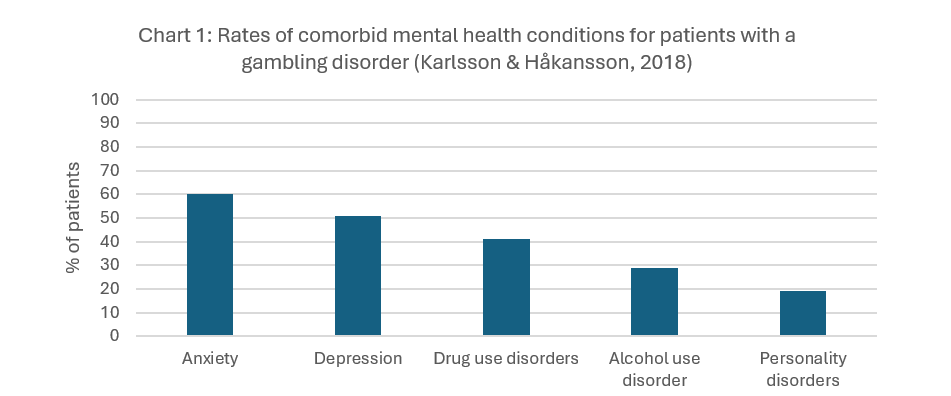
Sure enough, there was a lot wrong with the 2,099 people in the Swedish study. Between 2005 and 2016, 65 per cent of them suffered from “injury, poisoning, and other consequences of external causes”. 60 per cent had an anxiety disorder. 51 per cent suffered from depression. 41 per cent had a substance-use disorder. 29 per cent had an alcohol-use disorder. 19 per cent had a personality disorder. 19 per cent intentionally self-harmed. 12 per cent were bipolar. 9 per cent had schizophrenia. In the context of all this human misery, a suicide rate of one per cent does not seem too surprising and it is absurd to assume that all the suicides were the result of problem gambling. For many of these unfortunate people, gambling may have been the least of their worries.
The authors of the study freely admitted that these hospital patients were unlikely to be representative of the average problem gambler:
It is therefore likely that results may be skewed toward a population of individuals with more severe forms of GD [gambling disorder]. It is likely that this once again implies that this study sample might contain patients with higher mental health comorbidity, as well as individuals with more severe forms of GD, since these individuals are more likely to receive specialized psychiatry care.
Public Health England and OHID ignored all this and extrapolated the suicide rate among pathological gamblers with multiple co-morbidities in Swedish hospitals across the estimated number of problem gamblers in the general population in England. No attempt was made to adjust for the many other risk factors for suicide that these people obviously had.
Last year, however, one of the two authors of the Swedish study did exactly that. Using the same dataset in a new study for her PhD thesis, Anna Karlsson found that “gambling disorder did not appear to be a significant risk factor for the increase in suicide and general mortality when controlling for previously known risk factors”. She concluded that her research “could not determine whether GD [gambling disorder] is an independent risk factor for suicide”.
This does not mean that there is no link between gambling disorder and suicide. History and common sense tell us that people who get into severe financial difficulties are more likely to take their own lives and it is obvious that problem gambling is one way to suffer financial distress, albeit the only one that is now treated as a “public health” issue. What it does mean is that gambling disorder, on its own, was not a big enough risk factor for suicide to show up among the people studied by the Swedish authors using standard statistical practice. If you extrapolated the properly adjusted figures from the Swedish study across the English population, the number of gambling-related suicides would be zero.
It is hard to believe that OHID was not aware that it had made an error that a literal schoolboy could have spotted. Public Health England was closed down because it was incompetent and was too easily distracted by lifestyle issues when it should have been focusing on public health. It was more of an in-house lobby group than a serious scientific agency. It seems that closing it down and re-opening it under a new name with the same staff was not enough to make the leopard change its spots.
This is the fourth and final article in our series on attempts by state bodies to claim widespread suicide mortality associated with problem gambling. In the first three articles we demonstrated why estimates prepared by Public Health England and the Office for Health Improvement and Disparities were irretrievably flawed; we examined the conduct of PHE and OHID, including evidence of bias and inappropriate behaviour; and we considered the role played by the Gambling Commission, the Advisory Board for Safer Gambling and others in either propagating the PHE-OHID claims or withholding concerns about their reliability. We conclude by addressing the wisdom of attempts to boil down a matter as complex as suicide to any single factor.
It has long been understood that people with gambling disorder are at elevated risk of death by suicide. The DSM-5 (the American Psychiatric Association’s ‘bible’) comments on elevated rates of suicide ideation and attempts among people in treatment for gambling disorder (and makes similar observations in relation to a large number of other mental health conditions, including alcohol use disorder). Concerns in relation to gambling disorder and self-harm – and what might be done to prevent suicide by people with the disorder – are entirely valid.
It is also widely accepted that suicidality is a complex matter. In their 2016 meta-analysis of 50 years of suicide research, Franklin et al. made the following observation:
“…any individual with nearly any type of mental illness (i.e. internalizing, externalizing, psychotic, or personality disorder symptoms), serious or chronic physical illness, life stress (e.g. social, occupational, or legal problem), special population status (e.g. migrant, prisoner, nonheterosexual), or access to lethal means (e.g. firearms, drugs, high places) may be at risk for [suicidal behaviours and thoughts]. A large proportion of the population possess at least one of these risk factors at any given time, with many people possessing multiple factors.”
Understanding that people with a gambling disorder are at elevated risk of suicide is helpful when it comes to devising self-harm prevention strategies. For example, Hakansson & Karlsson (the Swedish researchers relied upon by PHE-OHID) conclude their 2020 study with the following recommendation:
“The findings call for improved screening and treatment interventions for patients with gambling disorder and other mental health comorbidity.”
It is questionable however whether studies of discrete associations between any single activity or human characteristic and death by suicide should – by themselves – be used to justify state controls on that activity. By way of illustration, a 2021 study on the prevalence of suicidal behaviour in a group of patients with behavioural addictions (Valenciano-Mendoza et al.) found:
“the highest prevalence of suicide attempts was registered for sex addiction (9.1%), followed by buying–shopping disorder (7.6%), gambling disorder (6.7%), and gaming disorder (3.0%).”
These findings may be useful for addressing risk of self-harm within population groups suffering from these mental health conditions. They do not – by themselves – justify bans on sex, shopping or playing video games. A 2017 study of young adults in England (aged 20-24 years, n=106) by Appleby et al., found that four deaths by suicide were linked to ‘gambling problems’; and this has been used to suggest that 250 deaths by suicide each year are ‘gambling-related’. The study also found that 44 of those who had died “had a reported history of excessive alcohol use. Illicit drug use was reported in 54 (51%)”; seven “were reported as experiencing problems related to being a student” (including five experiencing “academic pressures”. One might therefore estimate (using the same methodology as for gambling problems) that around 3,200 suicides are related to illicit drug use; 2,625 to excessive alcohol use; and 440 to academia. Such findings should prompt concern and policy responses; but it is questionable whether these should extend – for example – to complete bans on advertisements for beer or universities.
Some activists have called for coroners to assess, as a matter of routine, the possible involvement of gambling in deaths under investigation – the Bishop of St Albans has doggedly pursued a Private Members Bill to mandate this. At first blush it seems to be a reasonable suggestion. The problem is that it places an additional requirement on already over-burdened coroners; and risks distortion if other known factors are not also investigated with the same degree of rigour. The presence of Adverse Childhood Experiences (‘ACEs’) is a well-documented antecedent of suicide with one study (Dube et al., 2001) finding that as many as 80% of suicide cases analysed had a history of ACEs. There are also well-documented associations between relationship breakdown and self-harm. The practicality and wisdom of asking coroners to probe into every corner of the deceased’s life should be carefully considered.
Those determined to produce figures on the prevalence of gambling-related suicide should first set out a clear operationalised definition of what this term means. How is the relationship to be characterised (e.g. does the individual need to have gambled in the prior 12 months? Does he or she need to have a diagnosis of gambling disorder?) and to what extent is there evidence of causal contribution to death (e.g. was gambling disorder a significant factor or a minor factor?). Finally, they should be required to contextualise their findings by reference to other risk factors.
Running through some of the institutional responses to PHE-OHID is the idea that unreliable estimates of mortality serve a valid purpose pending the production of more robust statistics – something along the lines of ‘fake it until you can make it’. The chair of the Gambling Commission’s Advisory Board for Safer Gambling (‘ABSG’), Dr Anna van der Gaag, for example has written that:
“Good research, especially if it is on an under-researched area like this one, tends to begin and end in a different place, prompting challenge, replication, debate, and the research in this important area is no different.”
It is a view that overlooks four important points. First, the PHE-OHID work on the cost of gambling harms is riven with errors (including mathematical mistakes) and should not be considered “good research”. Second, the ABSG specifically called for “action” as a result of the PHE estimates – with no suggestion of the need for caution or refinement. Third, rather than welcoming challenge, the ABSG has engaged in ad hominem disparagement of those attempting to apply scrutiny to the PHE-OHID claims (likening this, without substantiation, to the activities of Big Oil). Fourth, it is questionable how far we should trust ‘better research’ if those responsible for it have propagated or tolerated misinformation in the past. As we saw during the Covid pandemic, the production of misleading statistics may in fact set back the cause of harm prevention by undermining trust in authority.
Suicide risk among people with a gambling disorder is a legitimate issue and warrants an intelligent response; but this is unlikely to be achieved through the publication of spurious estimates of prevalence. As the US economist, Professor Douglas Walker has observed;
“If researchers continue to offer social cost estimates, they should estimate costs that are measurable. But for other costs such as psychic costs that cannot be measured…let us identify them without providing spurious empirical estimates. Offering methodologically flawed cost estimates does not improve our understanding nor does it promote sound policy…In areas where research is still quite primitive, perhaps no data would be better than flawed data.”
Coda
We are aware that some individuals and organisations will resent this series of articles on PHE-OHID (not least the OHID researchers themselves). Our intention in writing them has not been to hurt or insult – but to shine a light on the way that some statistics are created and the distortive effect that ‘bad statistics’ can have on government policies. The application of scrutiny to research is an important part of the scientific process; and where state bodies are concerned, an important part of the democratic process too. It is entirely consistent to be concerned about a particular issue (e.g. risk of self-harm in a gambling context) and at the same time to believe that research into that issue should be conducted with honesty, openness and in accordance with scientific principles. In this way, we may hope to reduce the stigma associated with self-harm (such that gambling firms and other businesses gain the confidence to openly confront it); and that, over time, we may apply greater intelligence to the prevention of suicide in a gambling context and more generally.
The Great Suicide Deception. Part III – Conspiracy of Silence
Dan Waugh, Regulus Partners. May 2024
The Great Suicide Deception. Part III – Conspiracy of Silence
This is the third in a series of articles examining claims made by state bodies in England about rates of suicide associated with ‘problem gambling’. In the first we demonstrated that estimates of suicide mortality produced, first by Public Health England (‘PHE’, 2021) and then by the Office for Health Improvement and Disparities (‘OHID’, 2023) were irretrievably flawed. In the second, we looked at the behaviour of PHE and OHID, finding indications of a priori bias or inexplicable negligence and unsound governance. In this third article, we examine the conduct of others in positions of authority and ask why so many people who knew that PHE and OHID’s claims were unreliable decided to look the other way. We also recognise those who were prepared to apply critical analysis. Once again, we observe that, while gambling disorder has been recognised as a risk factor for self-harm for more than 40 years, efforts to tackle this are unlikely to be advanced by the use of junk science.
1. Why did the Gambling Commission not ‘do the right thing’?
By April 2022, Britain’s Gambling Commission knew that estimates of suicide mortality published by PHE were “unreliable” and based on “inaccurate” assumptions. This may have been a somewhat uncomfortable finding, given that the regulator had previously described the review as “important and independent”. It had arrived at this opinion despite not having received anything more than an executive summary (which it had not read when it agreed to provide “a supportive quote”). It also knew that PHE was far from “independent”, having been made aware of its intention to apply tobacco-style controls to participation in betting and gaming.
At a meeting in March 2022, Gambling Commission officials admitted that they did not understand how PHE had arrived at some of its estimates (no-one could have been expected to – given the fact that the calculations were mathematically incorrect). In April, these officials circulated a highly critical review of the PHE report, in which they noted that the suicide claims were not based on “reliable data”. The Commission however, elected not to take the matter up with the OHID (which had subsumed PHE upon the latter’s disbandment) or to inform the Secretary of State. The market regulator – which counts “doing the right thing” among its corporate values – elected to suppress its critique. In one rather sinister coda to the Commission’s critique, one official speculated that PHE’s claim of more than 400 suicides might be rescued, if only future prevalence surveys showed a higher rate of ‘problem gambling’ in the population. At this point, the Commission had started work on a new Gambling Survey for Great Britain in the expectation that – as a result of methodological issues – would produce a higher rate of ‘problem gambling’ than reported by tNHS Health Surveys.
When asked by journalists whether it considered the PHE claims to be reliable, the Gambling Commission responded that it was not its role to review the work of other state agencies; but failed to mention that this is precisely what it had done. As late as 2023, its chief executive, Andrew Rhodes continued to defend the PHE-OHID estimates, despite being aware of the problems with them; and it seems likely that the market regulator has been involved in disseminating the misinformation via approval of regulatory settlement funds.
2. the ABSG and the irrelevance of accuracy
In the summer of 2022, the OHID wrote to the Gambling Commission’s Advisory Board for Safer Gambling (‘ABSG’) to ask for its opinion on criticism of PHE’s suicide analysis. In her response, the ABSG’s chair, Dr Anna van der Gaag appeared to agree that there were indeed a number of issues. She wrote: “I see their point about basing calculations on the Swedish hospital study leading to an over estimation of the numbers”. She then proceeded to suggest that accuracy in such matters was unimportant and that attempts to apply scrutiny was “a distraction from what matters to people and families harmed by gambling”. This represented a change in attitude from three months earlier when the ABSG had described PHE’s highly exact estimate of 409 suicides associated with problem gambling as a “catalyst towards action”. The Gambling Commission allowed the ABSG to publish this opinion in the full knowledge that it was based on unreliable data.
The following year, Dr van der Gaag was one of two co-adjudicators responsible for allocating around £1m in Gambling Commission (regulatory settlement) funding for the purposes of research into suicide and gambling. Applicants were specifically directed towards the OHID analysis (i.e. estimates that the ABSG knew were flawed) as well as claims by the activist group, Gambling With Lives (despite the fact that even the OHID had indirectly criticised one of GwL’s claims). One of the successful bids (a £582,599 award to a consortium led by the University of Lincoln) included Gambling With Lives as an active member of the research team.
3. the Silence of the ‘Independents’
Among those who have supported the claims of PHE-OHID are a number of self-styled ‘independent’ researchers. These include academics from the universities of Cambridge, Hong Kong, Lincoln, Manchester, Nottingham and Southampton, as well as King’s College, London, who have cited the estimates uncritically in their work. Perhaps they considered (naively, if so) that research produced by the Government is unimpeachable; yet the errors made by PHE-OHID are so glaring that no researcher of any calibre could have failed to notice them. The failure to subject such serious claims to critical analysis before repeating them indicates – at the very least – an absence of intellectual curiosity. Much is made of the need for research independence (typically defined solely by an absence of industry funding, regardless of ideology or other affiliations); but independence has little value if it is not accompanied by intelligence and integrity.
4. Breaking ground
A small number of groups and individuals have been prepared to apply scrutiny and challenge, despite the circumstances. The Racing Post and the think tank Cieo have published a number of our own articles on the problems with PHE-OHID (as well as other issues with research-activism); and a handful of journalists, including Chris Snowdon, Steve Hoare and Scott Longley have been prepared to challenge the PHE-OHID claims. Figures from trade groups, bacta and the Gambling Business Group have spoken out publicly on issues with PHE-OHID.
Officials at the Department for Culture, Media and Sport have displayed a capacity for critical analysis, notable by its absence elsewhere in Whitehall. Their White Paper on reform of the betting and gaming market acknowledged valid concerns about self-harm but conspicuously omitted the OHID figures. Lord Foster of Bath, a stern critic of the gambling industry, has acknowledged that the PHE-OHID claims are not reliable and – in a show of honesty and humility rare in the gambling debate – apologised for using the figures himself. He continues to make the case for self-harm to be treated seriously in a gambling context; but without recourse to spurious statistics. Philip Davies, the Conservative Member of Parliament for Shipley, has challenged unsound statistics in parliamentary debates; and Dame Caroline Dinenage’s select committee for Culture, Media and Sport noted concerns of reliability in its report on gambling regulation.
One member of the Gambling Commission’s senior management team – Tim Miller – has been prepared to discuss and acknowledge problems with PHE-OHID; an attitude that contrasts sharply with that of his colleagues.
5. ‘Noble lies’ and consequences?
Underlying the PHE-OHID saga is a sense that some people in positions of authority consider it acceptable to publish inaccurate or misleading statistics if the cause is – in their opinion – just. Some have even suggested that scrutiny of misinformation is unethical, rather than its manufacture. In July this year, the Gambling Commission intends to publish statistics on the prevalence of suicidality amongst gamblers. Given its role in PHE-OHID (in addition to major issues with its new survey), it is questionable why anyone should consider these results credible. It has also – via Gambling Research Exchange Ontario – sponsored a programme of research into wagering and self-harm. Given that these studies have been explicitly grounded in the PHE-OHID deception – and the complicity of many of those involved – suspicions of bias will accompany publication. It is the publication of unreliable research – rather than scrutiny of those statistics – that undermines public trust in authority. Attempts to address health harms in any domain will be ineffective if they are based on inaccurate evidence.
An independent and open review should be carried out into the PHE-OHID deception; but it is difficult to see how this will happen. The Department of Health and Social Care and the Gambling Commission are unlikely to embrace scrutiny; and the DCMS will not wish to embarrass either its regulator or another government department. There are too many people in Parliament and the media who have played a part; and too few prepared to break ranks. The gambling industry meanwhile (with a number of notable exceptions) has shown little inclination to challenge. There is one hope – that the Office for Statistics Regulation will be prepared to take an interest in the integrity of public health estimates. Such an intervention would go somewhere at least towards restoring trust in public bodies.
Part II – Why did public health get things so badly wrong?
n the first in this series of articles, we examined the problems with claims made by state bodies – specifically Public Health England (‘PHE’) and the Office for Health Improvement and Disparities (‘OHID’) that up to 496 deaths by suicide each year in England are associated with ‘problem gambling’. We demonstrated that the basis for these claims is irretrievably flawed. Analysis of the Swedish dataset upon which they rely concluded that “gambling disorder did not appear to be a significant risk factor for the increase in suicide” (Karlsson, 2023). PHE and OHID researchers overlooked critical research findings and clear warnings about the advisability of their approach. While gambling disorder has long been recognised as a risk factor for self-harm, the estimates published by PHE-OHID are categorically unsound.
In this second article in the series, we attempt to understand why PHE and the OHID persisted in following such a clearly problematic approach in the face of strong evidence of its unsuitability; we examine a number of issues of governance; and consider whether officials may have deliberately misled policy-makers and the public.
The Tobacco Road: why did PHE make such unsound claims?
In May 2018, at the conclusion of its review into gaming machines and social responsibility, the British Government’s Department for Culture, Media and Sport asked PHE to “conduct an evidence review of health aspects of gambling-related harm to inform action on prevention and treatment”. More than three years later, in September 2021, PHE responded with the publication of five reports on the subject. One of these reports (‘The economic and social cost of harms’) claimed annual costs of £1.27bn a year associated with ‘problem gambling’ – with roughly 50% attributable to deaths by suicide.
It was this rather speculative document, rather than PHE’s more robust quantitative review of evidence from NHS Health Surveys, that officials chose to emphasise – prompting Britain’s Gambling Commission to surmise that PHE’s goal was, “to ensure gambling is considered as a public health issue.”
The Gambling Commission had already been given a glimpse of what “a public health issue” would entail. In a draft press release (seen by the Commission), PHE officials called for:
“a public health approach to gambling…similar to how we tackle tobacco consumption or unhealthy food consumption…”.
In the summer of 2022, the PHE researchers (now transferred to OHID) spelt out what this tobacco-style offensive would involve. Their paper, published in the Lancet Public Health, contained 81 measures for state intervention in the gambling market. The list included prohibitions on: all gambling advertising and marketing (including at racecourses); all in-play betting; and the sale of wine, beer and spirits in bingo clubs and casinos. It also included limits on the number of people permitted on a website at any one time, annual tax increases above the rate of inflation and even ‘plain packaging’ for all gambling products (no colours, logos or images permitted on playing cards, gaming machines, National Lottery tickets and so on).
There were other indications that PHE’s endeavours were not entirely objective – or morally neutral. In 2020, for example, its project leader stated that “more research is required to support advocacy and action” against gambling – hardly a statement of impartiality or scientific rigour. Meanwhile, documents made available under the Freedom of Information Act (‘FOIA’) reveal that PHE had agreed to be part of a research group set up by the activist charity, Gambling With Lives (‘GwL’) during the review period – an engagement it failed to disclose within its report.
Thank you for reading CIEO. This post is public so feel free to share it.
Why did OHID publish its report…and did officials mislead?
In January 2023, the Department of Health and Social Care (‘DHSC’) withdrew the PHE report and published an updated set of cost estimates – this time in the range of £1.05bn to £1.77bn a year (underpinned by a choice of 117 or 496 deaths). OHID described the decision to review PHE’s work as “a standard approach for previously published reports ”; but this seems to be untrue. The decision to re-examine the PHE cost estimates alone (none of the other four reports was reviewed – despite the presence of errors) was taken in July 2022 and announced to Parliament shortly afterwards. We have found no evidence that reviewing state agency reports within ten months of publication is a “standard approach” or that any such policy exists.
Disclosures made under FOIA reveal the true reason for review. On 26th July 2022, an unnamed DHSC official circulated a memorandum, stating:
“We are going to need to make changes to two of the evidence review reports as an error has been spotted, and as it’s a change to results, its [sic.] probably what you would classify as a major change.”
Given that the PHE report contained quite a few errors, it is difficult to know which particular mistake prompted re-examination; but the decision was certainly not part of a “standard approach”. This raises the possibility that OHID may have deliberately misrepresented the grounds for review.
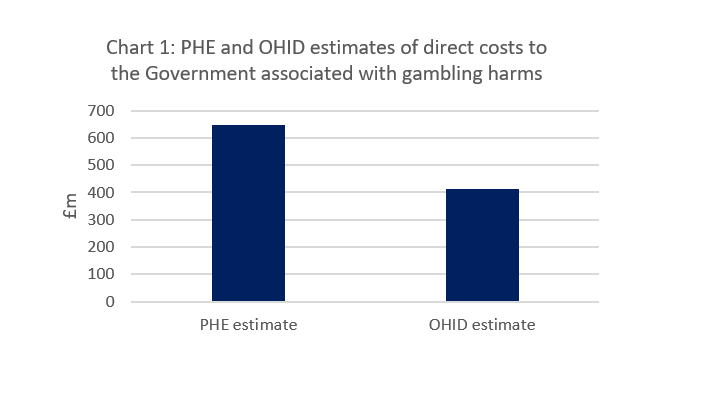
The Gambling Commission and the Advisory Board for Safer Gambling were both told by OHID researchers that “nothing in the report has changed substantially”; but this is incorrect. In fact, every single line item in the OHID cost estimate differed from the PHE version – in some cases substantially. Its estimate of direct costs to the Government was £234.1m lower than PHE’s – a reduction of more than one-third. This was masked by the introduction of a new area of intangible costs, relating to depression and several revisions to the suicide calculation. OHID’s estimates were also based on a ‘harmed population’ 59% smaller than in PHE. As chart 1 (below) shows, the claim that ‘nothing changed substantially’ appears misleading.
In August 2022, the then Health Minister, Maggie Throup MP advised Parliament that the PHE report would be reviewed and that the calculations underpinning its estimates would be published. The review however, has never been made public and – according to disclosures made under FOIA – no such document is held by the DHSC. Contrary to the minister’s pledge, the PHE calculations have still not been released. To do so would reveal a number of errors, such as the fact that PHE’s suicide figure was based on a 21% over-statement of the population prevalence of ‘problem gambling’.
The mystery of the OHID expert panel
OHID was at least prepared to admit – with a heavy dose of understatement – that its estimates were “uncertain”. It relied on a study of hospital patients in Sweden with a clinical diagnosis of gambling disorder (among many other health issues) to estimate the health risks for people in England with no diagnosed mental or physical health conditions whatsoever. In consequence, OHID leaned heavily on the opinion of its expert panel of health economists and academics who, it is claimed, approved the approach.
There are, however two problems where this opinion is concerned. The first is that one member of the expert panel, Dr Henrietta Bowden-Jones of the NHS had publicly criticised the PHE-OHID methodology. At a fringe meeting of the Conservative Party Conference in September 2022, Dr Bowden-Jones stated: “we cannot extrapolate from Swedish studies, from Norwegian studies – it doesn’t work”.
CIEO is a reader-supported publication. To receive new posts and support my work, consider becoming a free or paid subscriber.
The second issue is that the meeting of the expert panel – to discuss the most significant matter in the OHID report – is entirely undocumented. In February 2023, the DHSC admitted that:
“there was no agenda or papers shared before the meeting or minutes circulated afterwards”.
It is difficult to understand how this panel of experts might have been expected to review OHID’s work without access to any documents; and why officials did not consider it necessary to record the panel’s deliberations on this critical point.
Inappropriate behaviour?
The task attempted by PHE-OHID was always going to be challenging, given the dearth of actual data available. This does not explain or excuse the large number of errors and omissions made by researchers and officials:
PHE and OHID ignored warnings by Karlsson & Håkansson about the representativeness of the sample in the 2018 Swedish study (upon which they relied);
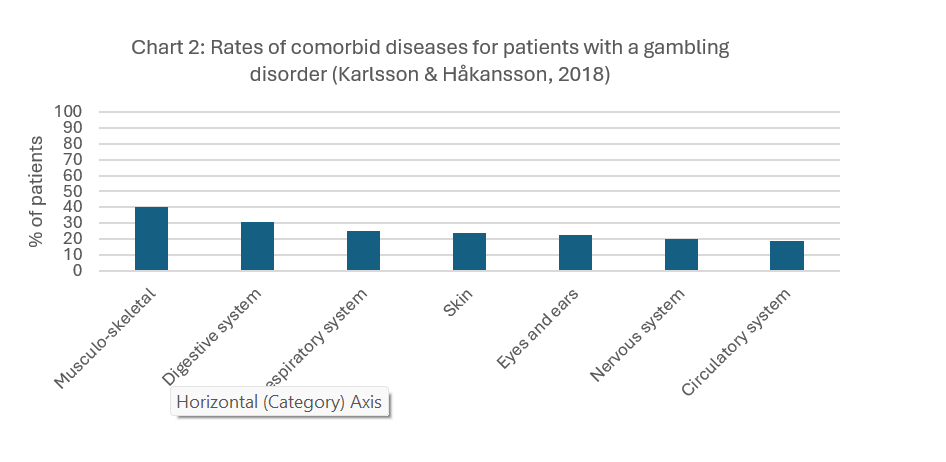
PHE and OHID ignored findings in the 2018 study of high rates of mental and physical health comorbidities.
PHE and OHID ignored the follow-up study by the Swedish researchers (Håkansson & Karlsson, 2020), which found that risk of suicide attempt was significantly mediated by the presence of other disorders.
PHE and OHID ignored the opinion of Dr Anna van der Gaag, chair of the Gambling Commission’s Advisory Board for Safer Gambling, that the PHE calculation was likely to be inaccurate.
A large number of issues with the PHE-OHID reports were brought to the attention of its Director-General, Jonathan Marron in July 2022 and again in September 2023. On both occasions, Mr Marron promised to investigate. Last year, he wrote that he would provide “a proper explanation” for the errors and methodological flaws; but more than seven months later, none has been forthcoming. In what may well be a breach of the Civil Service Code, OHID officials resorted to ad hominem disparagement of their critics – including one national news media outlet – rather than engage constructively.
What is particularly disturbing about the PHE-OHID scandal is not the fact that researchers (presented with an unenviable task) made so many mistakes; but that state officials proved so unwilling to confront them – responding with hostility to legitimate scrutiny.
Next week, in our third article, we will consider the behaviour of others in positions of political or moral authority who variously connived in the deception or turned a blind eye to it. We will reflect on what this means for their future involvement in research and policy-making.
‘If the Government does not want consumers to be asked to produce bank statements and tax returns in order to spend their own money, why is this happening? ‘
Great Britain: Regulation – Will Commission‘s slight return strike a blue tone with bettors?
“You don’t have to have the solution,
You’ve got to understand the problem,
And don’t go hoping for a miracle,
All this will fade away.”
‘Slight Return’, the Bluetones (1995)
The long-awaited publication of regulatory policy on affordability checks for gambling consumers in Great Britain may have provided clarity of a sort – but last week’s announcement was also notable for what it did not contain.
The Gambling Commission’s intention to run a six-month pilot of financial risk checks had been well-trailed. It was surprising therefore that its announcement contained so little information about how the tests would be conducted; by whom; and what criteria would be used to determine success. In 2017, the Gambling Commission’s Responsible Gambling Strategy Board published an Evaluation Protocol, based on the principles of ‘robustness and credibility’, ‘proportionality’, ‘independence’ and ‘transparency’. As things stand, it is unclear to what extent – if at all – the Commission intends to comply with its own protocol (or indeed the Government’s Magenta Book).
The Protocol states, for example, that good evaluation “should include a clear articulation of what an intervention is intended to do, the outcomes it is intended to achieve, and how it is envisaged these outcomes will come about”; and also that it “has data collection which is planned before the intervention is implemented – so that, if necessary, baseline data can be collected before the policy starts.”
The Gambling Commission has stated that the purpose of the new regulation is to create greater consistency for consumers; to regularise the patchwork quilt of trigger points and thresholds for checks that currently exists. At the same time, it has been remarkably incurious as to why this system of checks came into being in the first place and what effects it has had. If the Government does not want consumers to be asked to produce bank statements and tax returns in order to spend their own money, why is this happening? How has the existing system affected consumers, the functioning of the licensed and unlicensed markets and the finances of British horseracing? Without understanding this, how will we know that the Commission’s new system is better? Without robust analysis of the problem the policy is intended to solve, how will the success or otherwise of the pilot and any succeeding regulation be assessed?
The results of the 2021 ‘short survey’ into consumer attitudes towards affordability checks is another significant omission. Last year, the Gambling Commission committed to publish “theresults from the survey”, which was completed by 12,125 individuals, thought mainly to be bettors (horserace bettors in particular were encouraged to submit their views). Instead of this, the Commission has published what might best be described as a narrative description of responses to the overall call for evidence – which is not at all the same thing. The market regulator’s reluctance to publish the actual results will prompt speculation that it perceives the views of consumers to be inconvenient or of marginal relevance to its mission. The Commission may find that a failure to do what it said it would, hinders rather than helps its goals of increasing transparency and building trust.
Last year, the Gambling Commission denied a request, made under the Freedom of Information Act, to release the survey results. It claimed that the “necessary preparation and administration involved in publishing the information” outweighed the “legitimate public interest in promoting the accountability and transparency of public authorities”. What had seemed a doubtful excuse at the time now seems highly implausible. It is difficult to believe that the composition of a single webpage on responses to the 2020/2021 call for evidence involved very much “preparation and administration”. Having been forced to wait for more than three years for publication, this single page may strike the thousands of people and hundreds of organizations who took the trouble to respond as a rather slight return. Those who believe that the Commission has no interest in the views of recreational consumers are likely to feel vindicated. In a paper published in 1999, Bill Eadington, the father of modern gambling studies, described the way that gamblers are often treated as “customers whose demands are not fully respected in the public policy formulation process.” He had a point.
Public Health England was closed down because it was incompetent and was too easily distracted by lifestyle issues when it should have been focusing on public health. It was more of an in-house lobby group than a serious scientific agency. It seems that closing it down and re-opening it under a new name (OHID) with the same staff was not enough to make the leopard change its spots.
Dan Waugh- Regulus Partners
In recent years, the claim that up to 496 deaths a year in England are associated with problem gambling has become a staple of the debate on gambling market reform. The estimates originate from a 2023 report by the British Government’s Office for Health Improvement and Disparities (‘OHID’) and have been used to support demands for a wide range of additional controls on consumers and the market. There is just one problem – they are based on junk science.
While it has long been recognised that people with gambling disorder are at elevated risk of self-harm, the specific estimates produced by OHID – accepted uncritically by many in Parliament and the news media – rely on a number of ‘flat-Earth’ assumptions.
In this series of articles, we examine the methods used (and errors made) in calculating these figures and consider the conduct of those who have propagated them. In this, the first article, we demonstrate why the OHID estimates are unsound. In subsequent weeks we will describe the behaviour of the public health officials responsible for their manufacture; consider the actions of other notionally responsible bodies; and ask what public benefit is served by the generation of spurious statistics.
The first state-sponsored estimate of gambling-related suicides in Britain appeared in September 2021 with the release of Public Health England’s (‘PHE’) report, ‘Gambling-related harms evidence review: the economic and social cost of harms’. It contended that, in England, 409 suicides a year were “associated with problem gambling only”. In January 2023, the PHE report was replaced (due to identification of errors) by an update from OHID. It offered a choice of either 117 or 496 suicides “associated with problem gambling”.
Both the PHE and OHID estimates were based on a 2018 study of the medical records of patients treated in Swedish hospitals between 2006 and 2016. Dr Anna Karlsson and Professor Anders Håkansson from Lund University found that patients in the dataset with a clinical diagnosis of ICD-10 ‘pathological gambling’ (renamed gambling disorder in the ICD-11) were on average, 15.1 times more likely to die by suicide compared with the general population. PHE applied suicide mortality ratios from this study to NHS Health Survey estimates of the prevalence of PGSI ‘problem gambling’ in England to produce a figure of 409 deaths a year.
In 2023, OHID repeated the exercise, using precisely the same information, and produced figures of either 117 or 496 deaths (the lower figure based on the application of the Swedish mortality ratios to the population prevalence of DSM-IV ‘pathological gambling’). In doing so they ignored critical information and clear warnings that their methods were unsound. The hospital patients whose records were analysed in the ‘Swedish study’ suffered from a wide range of diagnosed mental and physical health conditions (see charts 1 and 2, below). As a group, they were at elevated risk of self-harm, regardless of the presence or absence of gambling disorder. PHE-OHID thought otherwise – assuming that health risks for hospital patients in Sweden with a wide range of illnesses were the same as for people in England with no diagnosed health disorders whatsoever. In other words, they made the ‘flat-Earth’ assumption that there is no association between mental and physical ill-health and risk of suicide.
In making this assumption, PHE and OHID ignored a clear warning from Karlsson & Håkansson. Their paper advised that the hospital patients whose records they had studied were likely to suffer from particularly severe and complex disorders:
“It is therefore likely that results may be skewed toward a population of individuals with more severe forms of GD [gambling disorder]. It is likely that this once again implies that this study sample might contain patients with higher mental health comorbidity, as well as individuals with more severe forms of GD, since these individuals are more likely to receive specialized psychiatry care”.
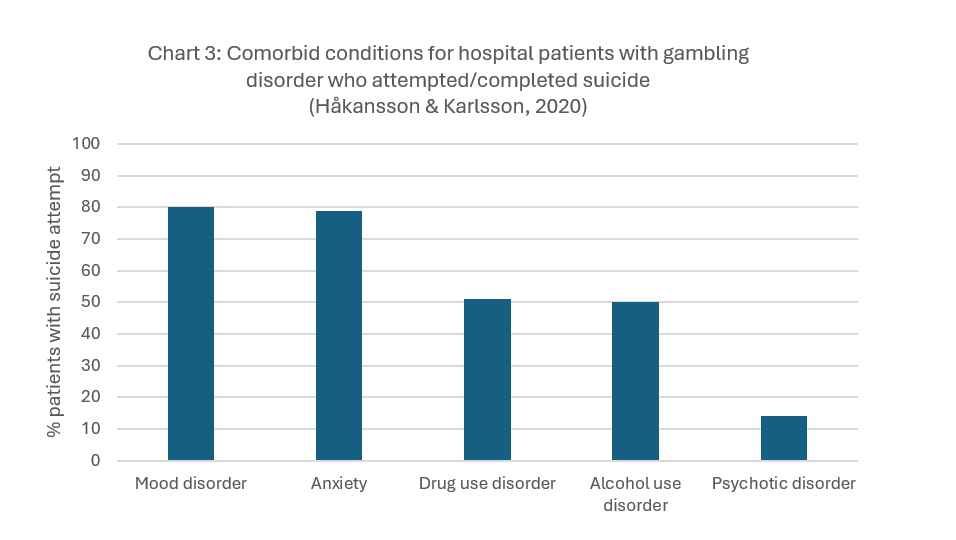
The PHE-OHID researchers also ignored findings from the follow-up to this study (the second in a series of five undertaken by the researchers from Lund University). Håkansson & Karlsson (2020) showed that comorbid health conditions were even higher within the group of patients who had attempted or completed suicide (see chart 3).
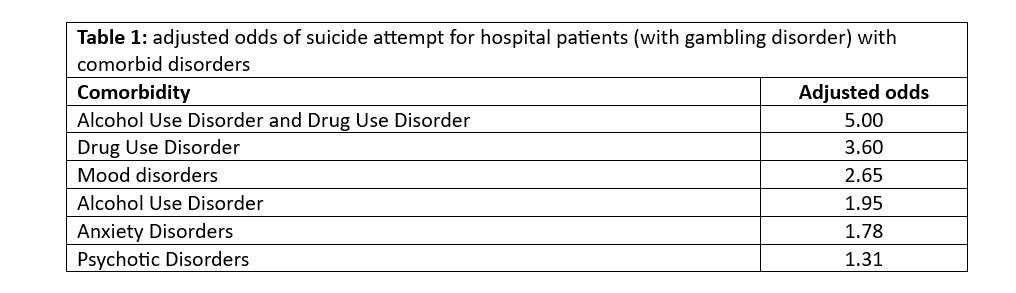
Professor Håkansson and Dr Karlsson showed that risk of suicide attempt was five times higher for patients with gambling disorder if they also had diagnoses of alcohol use disorder and drug use disorder. Of those patients who had made a suicide attempt, 70% had a diagnosis of alcohol use disorder or drug use disorder or both. The researchers at Lund University provided a range of adjusted odds ratios based on the presence of other diagnosed mental health conditions (see table 1). This study – which was published ten months prior to the PHE report – indicated that suicide risk for patients with gambling disorder was halved where no alcohol use or drug use disorders were diagnosed. Even before adjusting for other risk factors, these findings clearly demonstrated the inappropriateness of PHE’s approach.
A third study assessed the effect of socioeconomic factors on risk of suicide attempt. In the fourth study, a control group was used to identify discrete risks associated with gambling disorder. It concluded that:
“gambling disorder did not appear to be a significant risk factor for the increase in suicide and general mortality when controlling for previously known risk factors”.
This finding creates a dilemma for OHID and those who have propagated its claims. If one believes that analysis of the Swedish National Patient register by Karlsson & Håkansson provides a reliable basis for assessing suicide risk in England, then one must conclude that – contrary to PHE-OHID assertions – gambling disorder is not “a significant risk factor”. If on the other hand, one does not believe this is a suitable approach, then the PHE-OHID claims also cannot stand because they rely entirely on the mortality ratios from the first of the Swedish studies.
The fact that PHE and OHID got things wrong does not mean that underlying concerns about gambling disorder and self-harm are misplaced – or that gambling operators, treatment providers and policy-makers should ignore the issue. It has long been recognised that people with the disorder are at elevated risk of suicide, even if the precise nature of the relationship is complex. A number of recent inquests in England have determined that excessive gambling contributed to loss of life. Operators should do more to promote positive mental health and to address risk of self-harm among their customers and employees – whether gambling is involved or not. The PHE-OHID claims are, however, irretrievably flawed and should be disregarded by policy-makers. There is simply no coherent logic that allows them to stand.
In next week’s article, we will consider why PHE-OHID produced such obviously flawed findings and examine potentially serious issues of governance attending their publication.
List of abbreviations
DSM-III: The third edition of the American Psychiatric Association’s Diagnostic and Statistical Manual of Mental Health Disorders.
DSM-IV: A screening questionnaire published by the American Psychiatric Association within the fourth edition of its Diagnostic and Statistical Manual of Mental Health Disorders
OHID: the Office for Health Improvement and Disparities. Part of the Department of Health and Social Care.
PGSI: The Problem Gambling Severity Index. A screening instrument developed by Ferris & Wynne (2001).
PHE: Public Health England. A state agency, reporting to the Department of Health and Social Care. It was disbanded in 2021.
Dan Waugh is a partner at the global strategic sports and leisure advisory firm, Regulus Partners.
Great Britain: Regulation – Is the Great British Gambling Debate heading for a Terminal solution?
Last week’s House of Lords debate on gambling advertising was in many respects the same tired old combination of mistruths and moral indignation; but it was notable for providing a glimpse into the next phase of gambling policy discourse in Britain. Lord Foster of Bath, who instigated the short debate told the House that:
“I suspect public concern is about to rise because, in July, the Gambling Commission will release new figures about gambling harm. The Gambling Minister in the other place has already indicated that they are likely to show that 1.3 million people will classify as ‘problem gamblers’ and that a further 6 million are at risk. If confirmed, these figures are far higher than those used to inform the Government’s work on their White Paper. This is a real cause for concern, further strengthening the call for action.”
The intent could not be clearer. If the publication of the Gambling Survey for Great Britain (‘GSGB’) in July reveals a markedly higher rate of ‘problem gambling’ than the estimates relied upon by the Government in its White Paper, then the wisdom of the policies contained therein will be open to question. Lord Foster’s point is a fair one. In its White Paper, the Government relied on the 2018 Health Survey for England, which reported a ‘problem gambling’ prevalence rate of 0.38%; and the current Official Statistic (from the HSE 2021) is 0.25%. The Final Experimental Stage of the GSGB reported a figure of 2.5% – between six and ten times higher than the HSE. If the Government and regulator are confident that results obtained from the GSGB are reliable, concern groups will justifiably ask for a re-run of certain policy decisions (and possibly even Judicial Review, given the litigious bent of some activists).
The problem is, of course, that the Gambling Commission does not appear to be at all confident that results obtained from the GSGB will be reliable. Each of the new survey’s iterations – from the Pilot Survey in 2022 to the Experimental Stages in 2023 to Wave 1 of the official survey in 2024 – has revealed signs of sample bias. In an independent review (‘independently’ funded by the Gambling Commission), Professor Patick Sturgis of the London School of Economics, commented on the “non-negligible risk” that the GSGB would “substantially over-state the true level of gambling and gambling harm in the population”. He also urged caution, warning that “until there is a better understanding of the errors affecting the new survey’s estimates of the prevalence of gambling and gambling harm, policy-makers must treat them with due caution.” Such advice appears lost on the Commission (which prefers to gloss over inconvenient opinions). In addition to rates of ‘problem’ and ‘at risk’ gambling’, it plans to release survey findings in respect of suicidality, violence and abuse, mental ill-health and use of food banks – in the knowledge that the figures may very well be incorrect and misleading. Just when the Department for Culture, Media and Sport might have thought it was nearing the end of a long and tortuous journey on gambling reform, the Commission is throwing down new track.
The threat to the licensed betting and gaming market in Great Britain is severe. The public health establishment (including senior figures within the Department for Health and Social Care) has signalled its intention to “tackle gambling” (all gambling and not just harmful gambling) in the same way that it has dealt with tobacco smoking. Demands for total bans on advertising (including at racecourses), the sale of beer and wine in bingo clubs and casinos and the imposition of ‘plain packaging’ for all gambling products (no colours, logos or images – farewell Queen of Hearts), will intensify. In Scotland, it is reported that the SNP plans to raise the legal age of gambling if it achieves independence (presumably with a carve out for anti-gambling vitriol in its Hate Speech legislation) but this is only a stop along the route rather than a final destination. It is far from obvious however, that the industry realises the perilous nature of its current position. Tone-deaf advertising on bus stops and at railway stations only strengthens the ground for those seeking a terminal solution.
Great Britain: Regulation – The Invisible Hand of Gambling Market Regulation Some years ago, Britain’s Gambling Commission announced that it had banned the term ‘responsible gambling’. At the time it seemed like an odd move. Notwithstanding legitimate concerns about the misuse of ‘responsible gambling’ by some licensees (see for example, http://regulusp.blogspot.com/2014/11/the-recklessness-of-gambling-responsibly.html), there is generally something a little unsettling about state agencies censoring language.
Based on recent statements, one could be forgiven for thinking that the concept of responsible regulation might also have had its day. In an interview for the Smart Betting Club, GB Gambling Commission CEO, Andrew Rhodes appeared to wash his organisation’s hands of any responsibility for devising affordability checks; claiming that the current informal regime is the result of licensees reacting to enforcement cases rather than regulatory diktat. The theory of ‘spontaneous adoption’ however requires us to overlook the fact that in 2020, the Commission warned licensees that: “customers wishing to spend more than the national average should be asked to provide information to support a higher affordability trigger such as three months’ payslips, P60s, tax returns or bank statements which will both inform the affordability level the customer may believe appropriate with objective evidence whilst enabling the licensee to have better insight into the source of those funds and whether they are legitimate or not.” Mr Rhodes’s assurance that the Government does not want gamblers to produce payslips might be more convincing if it were not for the fact that this is precisely what the Gambling Commission has demanded of them. During the podcast, he described plans for financial risk checks and financial vulnerability assessments as Government policy, which the regulator has been asked to execute. This much is true; but it is also the case that the Commission has been the principal architect of that policy. Rhodes suggested that the Commission’s own plans for checks had been overtaken by the Government’s review of the Gambling Act, stating that: “a lot of people were saying that this is a really big policy topic and it’s really a matter for the White Paper – the Gambling Commission shouldn’t be trying to address this. And we agreed.” The fact is however, that when the Commission launched its call for evidence on affordability checks in November 2020, it did so in the full knowledge that the Government’s own review was imminent. Papers released under the Freedom of Information Act show that the Commission had originally expected the DCMS call for evidence in October – a month before its own was launched. Its refusal to publish the results – including the views of 12,125 individuals (understood to be mainly customers) – cannot be justified by reference to the White Paper alone. The Commission’s view that there is “no outstanding public interest” in releasing the information (1,169 days later and counting) is unlikely to be shared by those who took the trouble to respond.
Mr Rhodes also confirmed his expectation that “the black market in the UK will grow because it is being targeted” by unlicensed operators. There was little recognition however, of the contribution – positive or negative – of market rules to the creation of conditions in which illegal activity expands, rather like governments printing money and then blaming commodity prices for inflation. He also claimed that coverage of black-market issues by the Racing Post had been not “entirely helpful” – but it wasn’t clear what this was intended to convey. One possible interpretation is that the RP’s coverage may itself have encouraged bettors to use unlicensed bookmakers – a claim that requires substantiation if it is to be advanced (we stress that we do not know what Mr Rhodes meant by the remark; merely that this is one reasonable interpretation).
Andrew Rhodes cuts an increasingly frustrated figure these days – often giving the impression that everything would be fine if only people could be made to understand. He deserves credit for agreeing to take part in the SBC podcast. Engagement with a wide range of stakeholders is an essential ingredient of good market regulation. For it to be meaningful however, engagement requires a willingness to deal frankly with difficult issues, even if this involves occasional admission of responsibility or fallibility. To err is human; to evade is political. If the Government really wishes to sort out the mess of affordability checks, it should initiate a review to identify how the current system came into being and what the effects have been (in terms of harm prevention, consumer behaviour, law-breaking and market functioning). The truth is that a series of pilot schemes for affordability checks has been running for several years now. The effects of this programme should be independently assessed and evaluated – but this seems unlikely to take place. The lack of curiosity from officialdom about the origins and effects of affordability checks is telling.