Unreliable Suicide Claims in Gambling: ABSG’s Questionable Stance

The Great Suicide Deception. Part III – Conspiracy of Silence

Dan Waugh, Regulus Partners. May 2024

The Great Suicide Deception. Part III – Conspiracy of Silence

This is the third in a series of articles examining claims made by state bodies in England about rates of suicide associated with ‘problem gambling’. In the first we demonstrated that estimates of suicide mortality produced, first by Public Health England (‘PHE’, 2021) and then by the Office for Health Improvement and Disparities (‘OHID’, 2023) were irretrievably flawed. In the second, we looked at the behaviour of PHE and OHID, finding indications of a priori bias or inexplicable negligence and unsound governance. In this third article, we examine the conduct of others in positions of authority and ask why so many people who knew that PHE and OHID’s claims were unreliable decided to look the other way. We also recognise those who were prepared to apply critical analysis. Once again, we observe that, while gambling disorder has been recognised as a risk factor for self-harm for more than 40 years, efforts to tackle this are unlikely to be advanced by the use of junk science.

1. Why did the Gambling Commission not ‘do the right thing’?

By April 2022, Britain’s Gambling Commission knew that estimates of suicide mortality published by PHE were “unreliable” and based on “inaccurate” assumptions. This may have been a somewhat uncomfortable finding, given that the regulator had previously described the review as “important and independent”. It had arrived at this opinion despite not having received anything more than an executive summary (which it had not read when it agreed to provide “a supportive quote”). It also knew that PHE was far from “independent”, having been made aware of its intention to apply tobacco-style controls to participation in betting and gaming.

At a meeting in March 2022, Gambling Commission officials admitted that they did not understand how PHE had arrived at some of its estimates (no-one could have been expected to – given the fact that the calculations were mathematically incorrect). In April, these officials circulated a highly critical review of the PHE report, in which they noted that the suicide claims were not based on “reliable data”. The Commission however, elected not to take the matter up with the OHID (which had subsumed PHE upon the latter’s disbandment) or to inform the Secretary of State. The market regulator – which counts “doing the right thing” among its corporate values – elected to suppress its critique. In one rather sinister coda to the Commission’s critique, one official speculated that PHE’s claim of more than 400 suicides might be rescued, if only future prevalence surveys showed a higher rate of ‘problem gambling’ in the population. At this point, the Commission had started work on a new Gambling Survey for Great Britain in the expectation that – as a result of methodological issues – would produce a higher rate of ‘problem gambling’ than reported by tNHS Health Surveys.


When asked by journalists whether it considered the PHE claims to be reliable, the Gambling Commission responded that it was not its role to review the work of other state agencies; but failed to mention that this is precisely what it had done. As late as 2023, its chief executive, Andrew Rhodes continued to defend the PHE-OHID estimates, despite being aware of the problems with them; and it seems likely that the market regulator has been involved in disseminating the misinformation via approval of regulatory settlement funds.

2. the ABSG and the irrelevance of accuracy

In the summer of 2022, the OHID wrote to the Gambling Commission’s Advisory Board for Safer Gambling (‘ABSG’) to ask for its opinion on criticism of PHE’s suicide analysis. In her response, the ABSG’s chair, Dr Anna van der Gaag appeared to agree that there were indeed a number of issues. She wrote: “I see their point about basing calculations on the Swedish hospital study leading to an over estimation of the numbers”. She then proceeded to suggest that accuracy in such matters was unimportant and that attempts to apply scrutiny was “a distraction from what matters to people and families harmed by gambling”. This represented a change in attitude from three months earlier when the ABSG had described PHE’s highly exact estimate of 409 suicides associated with problem gambling as a “catalyst towards action”. The Gambling Commission allowed the ABSG to publish this opinion in the full knowledge that it was based on unreliable data. 

The following year, Dr van der Gaag was one of two co-adjudicators responsible for allocating around £1m in Gambling Commission (regulatory settlement) funding for the purposes of research into suicide and gambling. Applicants were specifically directed towards the OHID analysis (i.e. estimates that the ABSG knew were flawed) as well as claims by the activist group, Gambling With Lives (despite the fact that even the OHID had indirectly criticised one of GwL’s claims). One of the successful bids (a £582,599 award to a consortium led by the University of Lincoln) included Gambling With Lives as an active member of the research team. 

3. the Silence of the ‘Independents’

Among those who have supported the claims of PHE-OHID are a number of self-styled ‘independent’ researchers. These include academics from the universities of Cambridge, Hong Kong, Lincoln, Manchester, Nottingham and Southampton, as well as King’s College, London, who have cited the estimates uncritically in their work. Perhaps they considered (naively, if so) that research produced by the Government is unimpeachable; yet the errors made by PHE-OHID are so glaring that no researcher of any calibre could have failed to notice them. The failure to subject such serious claims to critical analysis before repeating them indicates – at the very least – an absence of intellectual curiosity. Much is made of the need for research independence (typically defined solely by an absence of industry funding, regardless of ideology or other affiliations); but independence has little value if it is not accompanied by intelligence and integrity. 

4. Breaking ground

A small number of groups and individuals have been prepared to apply scrutiny and challenge, despite the circumstances. The Racing Post and the think tank Cieo have published a number of our own articles on the problems with PHE-OHID (as well as other issues with research-activism); and a handful of journalists, including Chris Snowdon, Steve Hoare and Scott Longley have been prepared to challenge the PHE-OHID claims. Figures from trade groups, bacta and the Gambling Business Group have spoken out publicly on issues with PHE-OHID.

Officials at the Department for Culture, Media and Sport have displayed a capacity for critical analysis, notable by its absence elsewhere in Whitehall. Their White Paper on reform of the betting and gaming market acknowledged valid concerns about self-harm but conspicuously omitted the OHID figures. Lord Foster of Bath, a stern critic of the gambling industry, has acknowledged that the PHE-OHID claims are not reliable and – in a show of honesty and humility rare in the gambling debate – apologised for using the figures himself. He continues to make the case for self-harm to be treated seriously in a gambling context; but without recourse to spurious statistics. Philip Davies, the Conservative Member of Parliament for Shipley, has challenged unsound statistics in parliamentary debates; and Dame Caroline Dinenage’s select committee for Culture, Media and Sport noted concerns of reliability in its report on gambling regulation. 

One member of the Gambling Commission’s senior management team – Tim Miller – has been prepared to discuss and acknowledge problems with PHE-OHID; an attitude that contrasts sharply with that of his colleagues.

5. ‘Noble lies’ and consequences?

Underlying the PHE-OHID saga is a sense that some people in positions of authority consider it acceptable to publish inaccurate or misleading statistics if the cause is – in their opinion – just. Some have even suggested that scrutiny of misinformation is unethical, rather than its manufacture. In July this year, the Gambling Commission intends to publish statistics on the prevalence of suicidality amongst gamblers. Given its role in PHE-OHID (in addition to major issues with its new survey), it is questionable why anyone should consider these results credible. It has also – via Gambling Research Exchange Ontario – sponsored a programme of research into wagering and self-harm. Given that these studies have been explicitly grounded in the PHE-OHID deception – and the complicity of many of those involved – suspicions of bias will accompany publication. It is the publication of unreliable research – rather than scrutiny of those statistics – that undermines public trust in authority. Attempts to address health harms in any domain will be ineffective if they are based on inaccurate evidence.

An independent and open review should be carried out into the PHE-OHID deception; but it is difficult to see how this will happen. The Department of Health and Social Care and the Gambling Commission are unlikely to embrace scrutiny; and the DCMS will not wish to embarrass either its regulator or another government department. There are too many people in Parliament and the media who have played a part; and too few prepared to break ranks. The gambling industry meanwhile (with a number of notable exceptions) has shown little inclination to challenge. There is one hope – that the Office for Statistics Regulation will be prepared to take an interest in the integrity of public health estimates. Such an intervention would go somewhere at least towards restoring trust in public bodies.

A Very Public Deception: On the manufacture of mortality statistics in gambling

Part II – Why did public health get things so badly wrong?

n the first in this series of articles, we examined the problems with claims made by state bodies – specifically Public Health England (‘PHE’) and the Office for Health Improvement and Disparities (‘OHID’) that up to 496 deaths by suicide each year in England are associated with ‘problem gambling’. We demonstrated that the basis for these claims is irretrievably flawed. Analysis of the Swedish dataset upon which they rely concluded that “gambling disorder did not appear to be a significant risk factor for the increase in suicide” (Karlsson, 2023). PHE and OHID researchers overlooked critical research findings and clear warnings about the advisability of their approach. While gambling disorder has long been recognised as a risk factor for self-harm, the estimates published by PHE-OHID are categorically unsound.

Read Part One: Lost in Translation?

In this second article in the series, we attempt to understand why PHE and the OHID persisted in following such a clearly problematic approach in the face of strong evidence of its unsuitability; we examine a number of issues of governance; and consider whether officials may have deliberately misled policy-makers and the public.

The Tobacco Road: why did PHE make such unsound claims?

In May 2018, at the conclusion of its review into gaming machines and social responsibility, the British Government’s Department for Culture, Media and Sport asked PHE to “conduct an evidence review of health aspects of gambling-related harm to inform action on prevention and treatment”.  More than three years later, in September 2021, PHE responded with the publication of five reports on the subject. One of these reports (‘The economic and social cost of harms’) claimed annual costs of £1.27bn a year associated with ‘problem gambling’ – with roughly 50% attributable to deaths by suicide.

It was this rather speculative document, rather than PHE’s more robust quantitative review of evidence from NHS Health Surveys, that officials chose to emphasise – prompting Britain’s Gambling Commission to surmise that PHE’s goal was, “to ensure gambling is considered as a public health issue.”

The Gambling Commission had already been given a glimpse of what “a public health issue” would entail. In a draft press release (seen by the Commission), PHE officials called for:

“a public health approach to gambling…similar to how we tackle tobacco consumption or unhealthy food consumption…”.

In the summer of 2022, the PHE researchers (now transferred to OHID) spelt out what this tobacco-style offensive would involve. Their paper, published in the Lancet Public Health, contained 81 measures for state intervention in the gambling market. The list included prohibitions on: all gambling advertising and marketing (including at racecourses); all in-play betting; and the sale of wine, beer and spirits in bingo clubs and casinos. It also included limits on the number of people permitted on a website at any one time, annual tax increases above the rate of inflation and even ‘plain packaging’ for all gambling products (no colours, logos or images permitted on playing cards, gaming machines, National Lottery tickets and so on).

There were other indications that PHE’s endeavours were not entirely objective – or morally neutral. In 2020, for example, its project leader stated that “more research is required to support advocacy and action” against gambling – hardly a statement of impartiality or scientific rigour. Meanwhile, documents made available under the Freedom of Information Act (‘FOIA’) reveal that PHE had agreed to be part of a research group set up by the activist charity, Gambling With Lives (‘GwL’) during the review period – an engagement it failed to disclose within its report.

Thank you for reading CIEO. This post is public so feel free to share it.

Share

Why did OHID publish its report…and did officials mislead?

In January 2023, the Department of Health and Social Care (‘DHSC’) withdrew the PHE report and published an updated set of cost estimates – this time in the range of £1.05bn to £1.77bn a year (underpinned by a choice of 117 or 496 deaths). OHID described the decision to review PHE’s work as “a standard approach for previously published reports ”; but this seems to be untrue. The decision to re-examine the PHE cost estimates alone (none of the other four reports was reviewed – despite the presence of errors) was taken in July 2022 and announced to Parliament shortly afterwards. We have found no evidence that reviewing state agency reports within ten months of publication is a “standard approach” or that any such policy exists.

Disclosures made under FOIA reveal the true reason for review. On 26th July 2022, an unnamed DHSC official circulated a memorandum, stating:

“We are going to need to make changes to two of the evidence review reports as an error has been spotted, and as it’s a change to results, its [sic.] probably what you would classify as a major change.”

Given that the PHE report contained quite a few errors, it is difficult to know which particular mistake prompted re-examination; but the decision was certainly not part of a “standard approach”. This raises the possibility that OHID may have deliberately misrepresented the grounds for review.

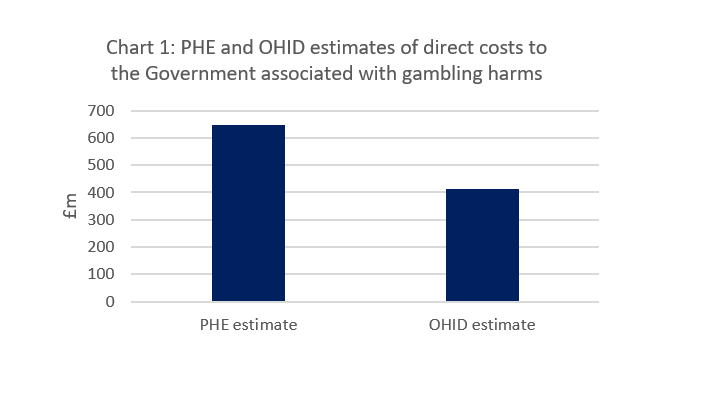
The Gambling Commission and the Advisory Board for Safer Gambling were both told by OHID researchers that “nothing in the report has changed substantially”; but this is incorrect. In fact, every single line item in the OHID cost estimate differed from the PHE version – in some cases substantially. Its estimate of direct costs to the Government was £234.1m lower than PHE’s – a reduction of more than one-third. This was masked by the introduction of a new area of intangible costs, relating to depression and several revisions to the suicide calculation. OHID’s estimates were also based on a ‘harmed population’ 59% smaller than in PHE. As chart 1 (below) shows, the claim that ‘nothing changed substantially’ appears misleading.

In August 2022, the then Health Minister, Maggie Throup MP advised Parliament that the PHE report would be reviewed and that the calculations underpinning its estimates would be published. The review however, has never been made public and – according to disclosures made under FOIA – no such document is held by the DHSC. Contrary to the minister’s pledge, the PHE calculations have still not been released. To do so would reveal a number of errors, such as the fact that PHE’s suicide figure was based on a 21% over-statement of the population prevalence of ‘problem gambling’.

The mystery of the OHID expert panel

OHID was at least prepared to admit – with a heavy dose of understatement – that its estimates were “uncertain”. It relied on a study of hospital patients in Sweden with a clinical diagnosis of gambling disorder (among many other health issues) to estimate the health risks for people in England with no diagnosed mental or physical health conditions whatsoever. In consequence, OHID leaned heavily on the opinion of its expert panel of health economists and academics who, it is claimed, approved the approach.

There are, however two problems where this opinion is concerned. The first is that one member of the expert panel, Dr Henrietta Bowden-Jones of the NHS had publicly criticised the PHE-OHID methodology. At a fringe meeting of the Conservative Party Conference in September 2022, Dr Bowden-Jones stated: “we cannot extrapolate from Swedish studies, from Norwegian studies – it doesn’t work”.

CIEO is a reader-supported publication. To receive new posts and support my work, consider becoming a free or paid subscriber.

Subscribed

The second issue is that the meeting of the expert panel – to discuss the most significant matter in the OHID report – is entirely undocumented. In February 2023, the DHSC admitted that:

“there was no agenda or papers shared before the meeting or minutes circulated afterwards”.

It is difficult to understand how this panel of experts might have been expected to review OHID’s work without access to any documents; and why officials did not consider it necessary to record the panel’s deliberations on this critical point.

Why did public health get things so badly wrong?

Inappropriate behaviour?

The task attempted by PHE-OHID was always going to be challenging, given the dearth of actual data available. This does not explain or excuse the large number of errors and omissions made by researchers and officials:

  • PHE and OHID ignored warnings by Karlsson & Håkansson about the representativeness of the sample in the 2018 Swedish study (upon which they relied);
  • PHE and OHID ignored findings in the 2018 study of high rates of mental and physical health comorbidities.
  • PHE and OHID ignored the follow-up study by the Swedish researchers (Håkansson & Karlsson, 2020), which found that risk of suicide attempt was significantly mediated by the presence of other disorders.
  • PHE and OHID ignored the opinion of Dr Anna van der Gaag, chair of the Gambling Commission’s Advisory Board for Safer Gambling, that the PHE calculation was likely to be inaccurate.

A large number of issues with the PHE-OHID reports were brought to the attention of its Director-General, Jonathan Marron in July 2022 and again in September 2023. On both occasions, Mr Marron promised to investigate. Last year, he wrote that he would provide “a proper explanation” for the errors and methodological flaws; but more than seven months later, none has been forthcoming. In what may well be a breach of the Civil Service Code, OHID officials resorted to ad hominem disparagement of their critics – including one national news media outlet – rather than engage constructively.

What is particularly disturbing about the PHE-OHID scandal is not the fact that researchers (presented with an unenviable task) made so many mistakes; but that state officials proved so unwilling to confront them – responding with hostility to legitimate scrutiny.

Next week, in our third article, we will consider the behaviour of others in positions of political or moral authority who variously connived in the deception or turned a blind eye to it. We will reflect on what this means for their future involvement in research and policy-making.

Dan Waugh

May 17th 2024

Regulus Partners

A Very Public Deception: On the manufacture of mortality statistics in gamblingA study of suicides in gambling, are we being told the truth? Part 1

Public Health England was closed down because it was incompetent and was too easily distracted by lifestyle issues when it should have been focusing on public health. It was more of an in-house lobby group than a serious scientific agency. It seems that closing it down and re-opening it under a new name (OHID) with the same staff was not enough to make the leopard change its spots.

Dan Waugh- Regulus Partners

In recent years, the claim that up to 496 deaths a year in England are associated with problem gambling has become a staple of the debate on gambling market reform. The estimates originate from a 2023 report by the British Government’s Office for Health Improvement and Disparities (‘OHID’) and have been used to support demands for a wide range of additional controls on consumers and the market. There is just one problem – they are based on junk science.

While it has long been recognised that people with gambling disorder are at elevated risk of self-harm, the specific estimates produced by OHID – accepted uncritically by many in Parliament and the news media – rely on a number of ‘flat-Earth’ assumptions.

In this series of articles, we examine the methods used (and errors made) in calculating these figures and consider the conduct of those who have propagated them. In this, the first article, we demonstrate why the OHID estimates are unsound. In subsequent weeks we will describe the behaviour of the public health officials responsible for their manufacture; consider the actions of other notionally responsible bodies; and ask what public benefit is served by the generation of spurious statistics.

The first state-sponsored estimate of gambling-related suicides in Britain appeared in September 2021 with the release of Public Health England’s (‘PHE’) report, ‘Gambling-related harms evidence review: the economic and social cost of harms’. It contended that, in England, 409 suicides a year were “associated with problem gambling only”. In January 2023, the PHE report was replaced (due to identification of errors) by an update from OHID. It offered a choice of either 117 or 496 suicides “associated with problem gambling”.

Both the PHE and OHID estimates were based on a 2018 study of the medical records of patients treated in Swedish hospitals between 2006 and 2016. Dr Anna Karlsson and Professor Anders Håkansson from Lund University found that patients in the dataset with a clinical diagnosis of ICD-10 ‘pathological gambling’ (renamed gambling disorder in the ICD-11) were on average, 15.1 times more likely to die by suicide compared with the general population. PHE applied suicide mortality ratios from this study to NHS Health Survey estimates of the prevalence of PGSI ‘problem gambling’ in England to produce a figure of 409 deaths a year.

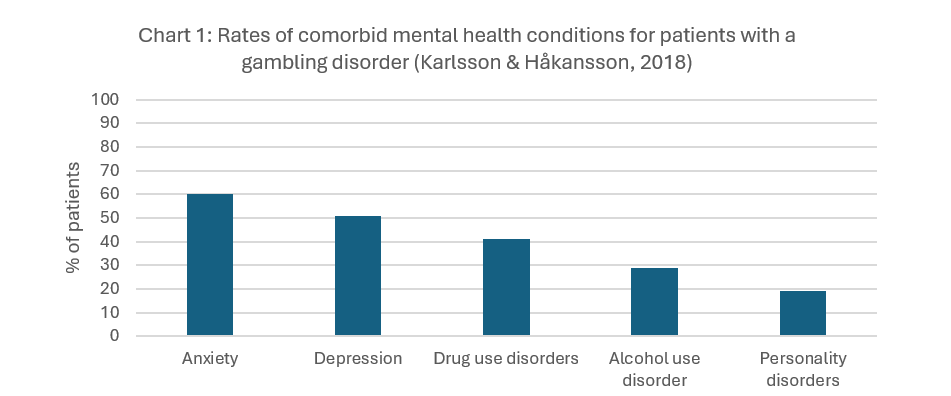
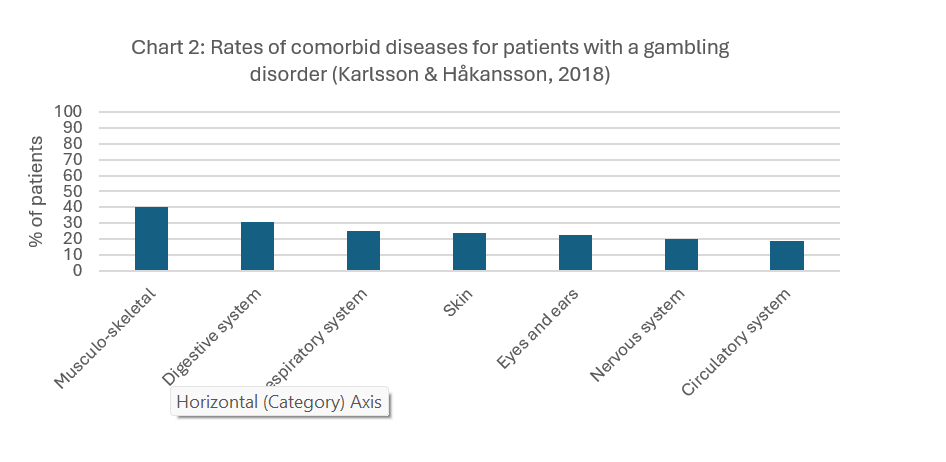
In 2023, OHID repeated the exercise, using precisely the same information, and produced figures of either 117 or 496 deaths (the lower figure based on the application of the Swedish mortality ratios to the population prevalence of DSM-IV ‘pathological gambling’). In doing so they ignored critical information and clear warnings that their methods were unsound. The hospital patients whose records were analysed in the ‘Swedish study’ suffered from a wide range of diagnosed mental and physical health conditions (see charts 1 and 2, below). As a group, they were at elevated risk of self-harm, regardless of the presence or absence of gambling disorder. PHE-OHID thought otherwise – assuming that  health risks for hospital patients in Sweden with a wide range of illnesses were the same as for people in England with no diagnosed health disorders whatsoever. In other words, they made the ‘flat-Earth’ assumption that there is no association between mental and physical ill-health and risk of suicide.

In making this assumption, PHE and OHID ignored a clear warning from Karlsson & Håkansson. Their paper advised that the hospital patients whose records they had studied were likely to suffer from particularly severe and complex disorders:

“It is therefore likely that results may be skewed toward a population of individuals with more severe forms of GD [gambling disorder]. It is likely that this once again implies that this study sample might contain patients with higher mental health comorbidity, as well as individuals with more severe forms of GD, since these individuals are more likely to receive specialized psychiatry care”.

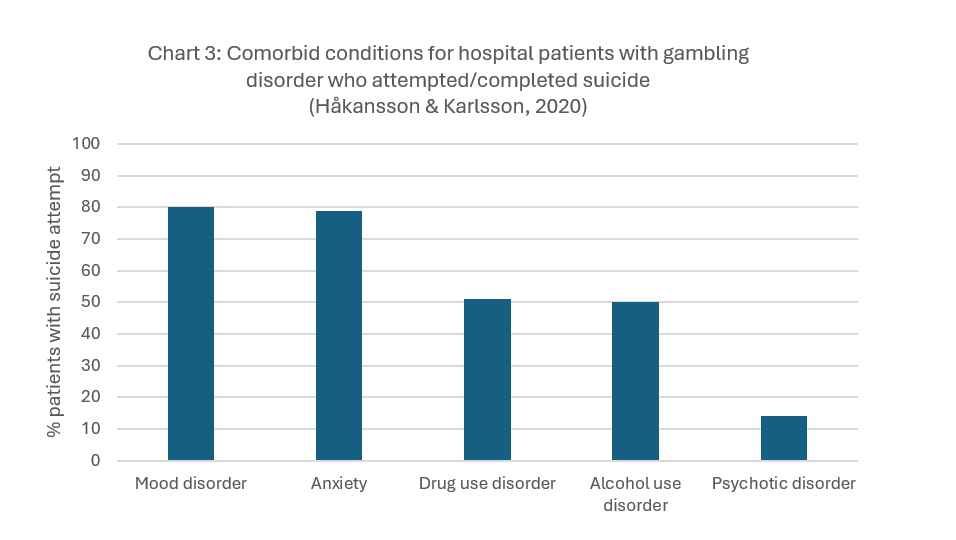
The PHE-OHID researchers also ignored findings from the follow-up to this study (the second in a series of five undertaken by the researchers from Lund University). Håkansson & Karlsson (2020) showed that comorbid health conditions were even higher within the group of patients who had attempted or completed suicide (see chart 3).

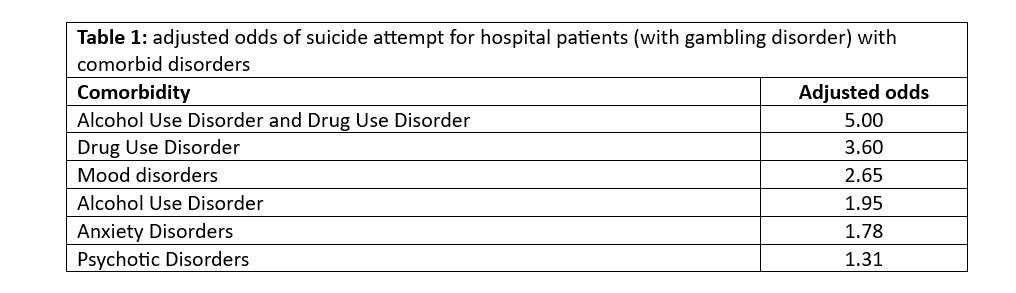
Professor Håkansson and Dr Karlsson showed that risk of suicide attempt was five times higher for patients with gambling disorder if they also had diagnoses of alcohol use disorder and drug use disorder. Of those patients who had made a suicide attempt, 70% had a diagnosis of alcohol use disorder or drug use disorder or both. The researchers at Lund University provided a range of adjusted odds ratios based on the presence of other diagnosed mental health conditions (see table 1). This study – which was published ten months prior to the PHE report – indicated that suicide risk for patients with gambling disorder was halved where no alcohol use or drug use disorders were diagnosed. Even before adjusting for other risk factors, these findings clearly demonstrated the inappropriateness of PHE’s approach.

A third study assessed the effect of socioeconomic factors on risk of suicide attempt. In the fourth study, a control group was used to identify discrete risks associated with gambling disorder. It concluded that:

“gambling disorder did not appear to be a significant risk factor for the increase in suicide and general mortality when controlling for previously known risk factors”.

This finding creates a dilemma for OHID and those who have propagated its claims. If one believes that analysis of the Swedish National Patient register by Karlsson & Håkansson provides a reliable basis for assessing suicide risk in England, then one must conclude that – contrary to PHE-OHID assertions – gambling disorder is not “a significant risk factor”. If on the other hand, one does not believe this is a suitable approach, then the PHE-OHID claims also cannot stand because they rely entirely on the mortality ratios from the first of the Swedish studies.
The fact that PHE and OHID got things wrong does not mean that underlying concerns about gambling disorder and self-harm are misplaced – or that gambling operators, treatment providers and policy-makers should ignore the issue. It has long been recognised that people with the disorder are at elevated risk of suicide, even if the precise nature of the relationship is complex. A number of recent inquests in England have determined that excessive gambling contributed to loss of life. Operators should do more to promote positive mental health and to address risk of self-harm among their customers and employees – whether gambling is involved or not. The PHE-OHID claims are, however, irretrievably flawed and should be disregarded by policy-makers. There is simply no coherent logic that allows them to stand.

In next week’s article, we will consider why PHE-OHID produced such obviously flawed findings and examine potentially serious issues of governance attending their publication.

List of abbreviations

DSM-III: The third edition of the American Psychiatric Association’s Diagnostic and Statistical Manual of Mental Health Disorders.

DSM-IV: A screening questionnaire published by the American Psychiatric Association within the fourth edition of its Diagnostic and Statistical Manual of Mental Health Disorders

OHID: the Office for Health Improvement and Disparities. Part of the Department of Health and Social Care.

PGSI: The Problem Gambling Severity Index. A screening instrument developed by Ferris & Wynne (2001).

PHE: Public Health England. A state agency, reporting to the Department of Health and Social Care. It was disbanded in 2021.

Dan Waugh is a partner at the global strategic sports and leisure advisory firm, Regulus Partners.

Racing and the whip

mark souster

Mark Souster

 
The debate about the whip, especially in jumps racing, is one of the  most important issues the sport has to confront. For some it is an existential threat. It has pitched traditionalists against reformers, heretics against the believers.
The focus on equine welfare and all that that entails – with fatalities high up the list too – will be on the Cheltenham Festival next week like never before. The scrutiny will be intense.

whip3
Remember it was two years ago that six horses died at the Festival, three in the Grand Annual. The images of tired horses being whacked in the four mile amateur’s race run on soft ground and when only four finished triggered an outcry.
Paul and Clare Rooney who are among the sport’s biggest British owners, then announced they would boycott Cheltenham – albeit only temporarily as it turned out – on welfare grounds.
It led to a review and a marked shift change in public perception which racing is only now starting to come to terms with.
At the prompting of government responsibility for its ultimate resolution has been taken out of the hands of the BHA, and falls to a new independent Horse Welfare Board compromising experts as well as laymen and women.

bha
Its first report landed last month.  It is clear as day that stronger penalties for misuse of the whip appear to be a certainty by the autumn. “The overall number of offences (over 500 in 2018) remains unnecessarily high and the current penalties do not provide an adequate deterrent effect,” the board concluded.
In its wake, the BHA has announced a three-month consultation with racing insiders and the public on changes to the whip rules, with a view to deciding on and implementing changes by the end of October.
The number of whip offences fell to an all-time low of 410 last year, less than half the number from 2011. However, the board pointed to concern on the subject from the public and politicians.
It said racing had to demonstrate “a proactive, positive direction of travel in relation to the whip, taking steps to eliminate misuse and leading any discussions around the future removal of the whip for encouragement”.
Far deeper questions are also being raised. Should that consultation include questions about whether a horse should be disqualified when its rider breaks the whip rules and also whether the whip should be banned as a means of encouraging horses in races?
Could punishments for whip misuse even be extended to the trainer and owner who had employed a jockey found to be in breach?

whip1
Barry Johnson, a former president of the Royal College of Veterinary Surgeons is the chair of the HWB. “This is a matter of public trust.”
The prevailing thought seems to be that racing needs to address these issues and be accountable if society is to continue to give them a ‘social license to operate.’ Well that is taking it too far.
Racing maybe facing a King Canute moment where the end result is the sport being swamped in a tide of public indignation.
But it needs to draw breath and compose itself and come out with persuasive and reasoned responses. Emotion must not be allowed to replace hard fact and cold analysis. For instance when presented with the evidence from the BHA the Rooneys changed their minds and good on them.
rooneys
We need to get to the core of fundamental questions: Why do we use the whip – for safety encouragement, or an element of both? Where and when did it start being used? Does it instigate a fight or flight reflex? Does it inflict pain?
If it doesn’t, as most contend, then it’s not cruel then why shouldn’t we continue to use it?  And why call it the whip which has such negative violent connotations?
Perhaps a controlled experiment and research would help. If a horse responds to the whip, is it because it focuses them? Does it make them try harder? Or simply stop?
Would we be better off without the whip, so we have lots of hands and heels riding, and maybe carry the whip only for safety?

whip2
Do horses go faster with the whip? If not then why do we use them?  Especially as it’s always at the end of a race when they are all going slower because they are tired.
As one expert put it to me: “I’m sure if you had hit Seb Coe towards the end of a race he probably wouldn’t have been able to go any faster.”
So many questions and as yet too few answers.

Mark Souster


Mark Souster has been the racing writer at The Times since 2016. Before that he was rugby correspondent. In that role he was named sports journalist of the year by the Society of Editors and won sports scoop of the year for his revelations about England’s 2011 World Cup campaign. He has twice been nominated for sports news correspondent of the year.

Unibet’s favourite ambassador

There’s a dangerous saying in Racing. ‘How dare you question me?’ One could introduce  perhaps ‘I am beyond reproach.’

unibet2

But Nicky, you’re not beyond reproach, for a second. In fact it does appear to coin another well turned phrase, ‘he doth protesteth too much’

Whilst I personally find Nicky,  a most amiable sort, and of appreciable talent, there are two things which he has to take fully on board. One, racing fans don’t have reason to appreciate nor like the commercial stance you are adopting in relationships with Bookmakers. And second, you have to accept that the behaviour of those who work in your yard, or how information is utilised, will be the target for speculation, for as long as you maintain horses are in great order, only to withdraw them a couple of days later.

The ‘some journalists are dead meat’ comment, is unprofessional, and unjustified. Frankly it’s a dangerous precedent, from a yard that so dominates the sport. Journalists have an important role to fulfil, and it’s not to kiss people’s backsides. Fine, we all accept Racing press notoriety not for hard headed sports journalism, rather a deserved reputation for the supine. Printing the rubbish peddled by top trainers as gospel has long since reached epidemic proportion.

See this interview with Matt Chapman from ITV’s feed in which he denies there was a problem with Altior on the Saturday before the Tingle, and maintains there was ‘no issue’

https://www.google.co.uk/url?sa=t&rct=j&q=&esrc=s&source=web&cd=2&cad=rja&uact=8&ved=0ahUKEwjn1YjumaXYAhXpCsAKHX7WAJ0QFggwMAE&url=https%3A%2F%2Fwww.itv.com%2Fracing%2Farchive-clips%2Fmatt-chapman-speaks-to-nicky-henderson-about-the-altior-controversy&usg=AOvVaw1OlX8-6oTcPV6qZcU03oJu

And here is Nick’s Unibet version which maintains there WAS an issue with ALtior’s breathing the Saturday before

https://t.co/4dfZFYlzfq


I don’t know about you, but I’m struggling to understand which version I am to believe?


To deal with each point. One, the practice of association with Betting companies is an abhorrent development, something Henderson should be fully aware is deeply unpopular. Let me remind people how companies such as Ladbrokes utilise information to their advantage, gained from accounts they operate,  as in the David Evans- Rule 4 saga. Anyone that imagines these betting behemoths behave with impeccably good manners when it comes to money must be living in some form of fantasy world. None of them behave well. In fact there’s compelling daily evidence to show how low they have stooped as companies in their pursuit of accounts and money. They’re bound to use associations with top trainers to their commercial advantage, and to penalize their customers therefore. And Nicky knows this, hence his exaggerated indignation at Cheltenham.  Unibet have no reason to release your ‘information’ promptly. They are not a news service.

Punters simply think they are being cheated, whether that’s true or not, such association used to be outlawed, for very good reason. The BHA haven’t supplied any rationale for this decision, and don’t expect a docile Gambling Commission to do anything about it either.

To boot Unibet have ensured the very latest flow of information from Seven Barrows, via their association with your stable Jockey, Nico De Boinville. Couldn’t get any more insidious.

unibet1

Henderson simply shouldn’t be releasing information via any medium other than the stable’s own twitter feed, or perhaps via the racing press feed. Good news, or bad news. A Bookmaker is simply not the right vessel.

altior

As a bookmaker, we were aware of very significant monies for Fox Norton, for the Tingle Creek in the day PRIOR to the withdrawal of the mighty Altior. And we were not alone as the news was all over Twitter. Betfair exchange and other bookmakers reported the same pattern of monies. Fine, Hendo may not have personally made a final decision as to the participation, but others quite clearly had leaked their doubts to their associates, as to the participation of Altior. The fact remains, some people generously helped themselves before the information was released, and they were proven correct. Who was leaking this information, or were they all better informed than Henderson himself? You were after saying the horse was in ‘magnificent order.’

One concludes either Henderson doesn’t know the well being of his horses, he’s waiting on the strength of the opposition to show their hands, or someone else in his organisation knows his charges better than he does.

Perhaps it could be the myopic focus on the Cheltenham Festival. A subject which concerns many racing fans, excepting the regulator itself. The Tingle, Fighting Fifth and many more top races decimated. The BHA far too slow to establish minimum conditions of entry for the Festival. Something they’re told by the likes of Henderson ‘isn’t possible.’

It is. Yesterday I heard the NFL, the world’s best sporting body, totally re-jig it’s schedule next week, to put all potential playoff games on at the same time. Doubtless upsetting giant TV networks. That’s how to run sport. Act

The truth is – Altior will be another one of those top stars who turn up in March, having not experienced a real race (of his class) in the six month lead up to Cheltenham.

The pigs ended up in the betting trough, and people are fully entitled to know why, since they are investing in the sport.

Associations with big betting companies by jockeys and stables has to be ended by this BHA. There’s no sensible regulatory reason for such deals, other than to upset the very people who funded the sport to the tune of 52 million last year.

Remember, Mr Rust, the only people to benefit from those deals are the best of trainers and jockeys. The little guys rarely share in such windfalls, and if it in any way has the whiff of impropriety,-  it has to be outlawed.

unibet3

Finally, I would add that Henderson’s ‘how dare you’ approach, as a top trainer needs to be roundly condemned, in all quarters. This arrogant approach, that if you dare question anything I do, in the manner so common in other sports, is damaging to the good governance of racing. nobody should be above fair interview. Tell me why Nicky Henderson thinks he only deserves good press?

It wasn’t so long ago Nicky, that you were handed the softest ban in living memory for doctoring records, to conceal guilt, and administering banned substances to your horse. I don’t doubt the shame of reporting in those days leaves a hurtful stain in your memory, but you have to accept that those journalists, then and now, are simply, and fairly, doing their job. You broke the rules, knowingly, and with appropriate disregard for the rules. It’s more than a bit rich to claim the moral high ground over your associations with betting companies, especially if you don’t bet with Unibet. I expect most people get their racing news from the Racing Post, or the Guardian. Aren’t these more appropriate mediums?

So Nicky, accept the brickbats as they come, because you most definitely benefit from a veritable avalanche of good press when your horses do well.

I suppose I’m dead..


National Hunt – a code in crisis

Racing fans comprise four sets of folk. The outraged form 49% (A). This group won’t hear speak or listen to any criticism of the sport, they either work for a racetrack, punt favourites over the jumps, or sit indoors with the curtains shut.. The disaffected, numbering 50% (B), a group whose numbers rise annually and constitute the biggest moaners in Racing. Escapees from the Betfair forum, sitting in their underpants at home whining about getting on. The third group go Racing, but only view it from corporate boxes, don’t drink beer, miss all the fights and haven’t a clue what’s really going on outside the box. (Group Q) Excuse merchants, apologists and evangelists form another strange sect (Group E). Then we have a small section of disaffected journos and pundits who’d better shut up or else (X)

The final 1% work for the BHA (Z). The persecuted ones. They would join St Peter being crucified upside down.

crucify

The executive are selected by the racetracks on rolling three year contracts. The current Chairman knew less about Racing than my cat when he arrived, presided over some notable fails like Mathew Lohn, then quietly and ‘humbly’ voted into another 3 year term..

Now tell me – why would you vote to Chairman someone who knew so little about the sport? Why did he then go about the removal of a more experienced board in favour of amateurs with equal skill level? Why are commitees informed a reduction in the programme is ‘off the table?’

Is the regulator looking after the interests of racing, or is the system of election of the Chairman dependent on what he does for  racetracks? Chairman of the BHA isn’t akin to golf club captaincy.

harman

Look, I know you all think I hate the BHA (Group Z). Come come now, I’m not that bad really, honestly. I’ve made clowns of them once, but I’d like to think their decisions were based on regulating and promoting the sport, not battling bookmakers for cash. Truth is the BHA  (Z) hierachy is never going to act for Racing for as long as the tracks sit on the board and appoint the leaders.

Turkeys rarely buy Xmas cards. More galloping about the ovals keeps the track bosses in tweed and BHA execs in badges. Kempton makes more money than any other JCR track (Group A) – except Cheltenham. Pop there on a Wednesday night and you’d swear the gates had been locked shut. It subsists on an attractive Levy payment for every race. Three runners or fifteen, its all gravy.

The swing to sandpits, to include the gothically dull Newcastle straight (A), needs runners from the available horse population, and owners. If you’re a prospective jump owner, up against wannabee’s like Rich Ricci (Q and E), forking out hundreds of thousands a horse, – you can afford 65 pence a purchase. Ricci stables his muckers the Mullins pad, coffee machine, babestation and minibar in every box. Regular owners on limited budgets can’t compete nor cover the exxes. And your trusty milker can only hack around 5 or 6 times a year. On the all weather, chances are you’ll do better. Even if you’re the only one interested if it wins..

549178-drunk-aussie-racegoers-steal-uk-headlines

It is a matter of pure fact belting out sand races at the rate of 3 meetings a day harms the winter code. Is there any chance a whole summer of jumps nobody cares about is a pointless exercise, for everyone except Plumpton? Or have i taken leave of my Scottish mind?

Jump Racing sacrificed on the altar of an engorged BHA all weather list . Months of 4 and 5 runner events. It’s not on, and time you fans stood up and demanded change.

This year, and with apologies the excuse merchants (E), the fields in jump racing have never been so poor. 3 and 4 runner events abound. When they’re strung out for 465 yards, this is what sporting people (B) call ‘uncompetitive’or ‘dull’- unless that is you like Formula one

racing

The ground isn’t firm. It’s good racing ground, so stop telling me a its akin to a bed of nails to a horse. Indeed they’ve been running all summer. And when the ground is good in April at Aintree – they’ll be running, this is what explodes the myth about ground..There’s simply too much racing and too few runners to support the code and it cannot roll on for 3 or 4 months in this vein every year, whilst we all sip champagne in our box, waiting on Cue Card. A couple of weeks ago we had 19 runner fields at Doncaster on the flat. 7/1 the field and 1/4 the odds if you’re a betting man. Competitive, and attracts people to watch on telly. Yesterday I watched Lydia Hislop (X) trying to make Wincanton sound interesting. She should have been awarded a DSO..

stiers

So Mr Harman and Mr Rust (Q E and Z) I know the issue of racing volume gets dull, but that’s because you refuse to accept it’s a failed system..  I fully accept your jobs depend on the goodwill of masters more interested in Levy than bums on seats. I’m staring at a Kempton card with 3 three runner races and a Carlisle card with a 2 runner heat. It’s your turn in the chair and you’ve got two years left to save a code so many love before you’re replaced by the fellahs who run Southern Rail (Q).

This is a sport very much in crisis, and you are tasked to act in the interests of the sport as a whole, even if the Trustees are more interested in levy grants. Do better than serve out your time and a 0.1 runner increase per race per year. We’ll all be pushing up daisies by the time you start delivering.


Or am I being too diplomatic??

ascot

ps. If you want to earn money from Betting, try enforcing a minimum margin on operators in return for hefty levy rate reductions. Not a tip you’ll get from the current crop of non execs..

Banks.(X)

Don’t forget to gamble responsibly..

Watching the Oikball the other night, sitting next to my Sons, I observed West Ham sporting their snappy outfits pressed and laundered by Betway. Newcastle were sponsored by those nice people that lend money – Wonga. The stadia was adorned with Betway bunting. The adverts during the game were predominately sponsored by companies claiming their users ‘gambled responsibly’ – Especially Ray Winstone, who I doubt has had a tenner on anything in his life. But it’s great viewing for children. Honestly

bet3656
If you like to watch sport, you’ll get used to this. If you like your late night telly – you know – stop camera action from the police force in Reading, the best looking penis, or shows about cars with fabulous emission ratings, you’ll also have become used to proliferation of gambling adverts. Some of whom sound almost heroic.
Of course we’re encouraged to ‘gamble responsibly’ by the yellow sign that tells us all (subliminaly) that when we’ve had enough FUN FUN FUN – we must learn to stop.
In other words, when you’ve run out of cash, maxed out every credit card you’ve got, kicked the fruit machine to bits, mortgaged your home to the hilt, turned your Missus into a Lesbian, and of course made the BBC documentary on ‘Britain At The Bookies’ – the home for all genuine sad acts, – then you’ll have truly arrived in the worlds of Bet365 and William Hill
If you’re in the minority, like me, the Mary Whitehouse types, you might pause for a moment and wonder what effect this siege of advertising has on our phsyche- not to mention those of our children. I mean we stop cigarette adverts, so why is it permissable that EVERY ad break tells us we have to spin to win? And sometimes more than once a break?

bet3655
And of course, as every independent bookmaker and decent minded citizen knows- The UK’s ‘watchdog’ – the Gambling Commission, with all its fees and hype – does absolutely nothing. Nothing at all, to justify its very existence. ‘To protect the vulnerable.’

The ‘vulnerable’in this case appear to be online gaming giants

Little known- but worth mentioning, back in April I challenged Paddy Power on promotions headlined with the banner ‘money back’ on certain wagers. This was a headline grabber and peddled widely in the press. I invited them to desist from encouraging customers to wager under the entirely false assumption certain stakes would be refunded, when in actuality the customers were being refunded in ‘free bet stakes’. Of course the two are entirely different offers

Paddy Power declined to remove promotions with said headlines.

I challenged this with the ASA as misleading and wholly false. The challenge was upheld and they were ordered by the authority to cease free bet promotions with the headlines money back.

Paddy Power were not alone – Many firms were doing exactly the same, and in direct contravention to an earlier ASA ruling against Betfair for the same type of claims. These firms were directly contravening an earlier ruling

The question is this. Why did the Gambling Commission, the custodian of fair gambling and the vulnerable, not step in at any stage to order such promotions to be withdrawn? Is this agency actively complicit in protecting such firms from basic licensing conditions? Were said firms not in fact contravening several codes in licensing practices with such claims?

.
I think I’m a fair minded bookie. I try to give my customers a better class of service and compete on odds with the high street. And as a bookie you might expect me to side with my own. I mean I do have a gambling site. But I don’t bombard people with adverts at 2am about it, and if I were to shove it on my occasional trips to Channel 4, where I upset the establishment for your viewing entertainment, I’d get my backside kicked off pronto.
I’m deeply uncomfortable with what goes on. I feel for those who are suffering. I favour a UK wide ban on anyone who self excludes – not backed by the Gambling Commission. I disagree with the use of credit cards to fund gambling. I disagree with Gibraltar outfits shoving their ‘online’ products to Racing. Although I scoff at the BHA’s lack of backbone in any department, all sound bytes.
I hear a lot of complaints from punters, some of whom could accurately be described as ‘bonus junkies.’ The new breed of professionals who scour the bookie websites for top of the market hits. I have some sympathy with the bookie view that a lot of those types of customer are worthless to us in business.
BUT. If Paddy Power are to offer even money each of two in a Rugby match, with just the outside chance of a handicap ‘tie’ to save them, if Skybet are to offer a loss leading 6 places on the Cambridgeshire, if Coral are to offer 6/1 each of 2 in a tennis match to new customers only – and all of them make money, then I know they’re not getting fat on those sports, especially the increasingly worthless racing product.
So they’re fattening on gaming. – NAP

bet3651
Bet365 seem totally content to treat their customers with err, uhm contempt, by offering a customer, their customers, a £1 wager. They don’t care about the PR implications of being described by the same as ‘total frauds’ for describing themselves as ‘Bookmakers.’ Because they’re global. And for every clued up punter they treat so poorly over here, there are perhaps 5% of these new accounts they dig up that make the whole exercise of pushing for new business worthwhile. And deeply profitable. One can admire their bottom line, if not their methodology
Should we feel sympathy for those professional types who complain so vociferously? Clearly we care about the genuine punters who fluke a 16/1 winner and find their next wager batted down to 36p. But the pros?
For myself, I never keep a customer on if I’m not prepared to lay him or her a bet to lose at least £50 as a minimum, and remember that’s my minimum, not the average of what we’re prepared to lay. But that’s because I have standards. I may not like what some customers get up to, but if I do, I close them down with a fair explanation of why it’s been done. We do not hide behind ‘trading decisions’
But the big companies are the ones peddling the prices and offers. They’re continuously driving for new gaming custom and fully prepared to be ‘best odds guaranteed’ or ‘best prices for all Channel 4 races’ – even if it guarantees a loss. It’s a bit like the supermarkets claiming they make nothing from milk, because they choose to sell it so cheap to get the customers into the stores in the first place. They don’t care if the dairy farmer ends up out of business.

bet3653
These ‘companies’ have created the bonus and offer culture. The free bet. I heard recently Coral offering a guarantee to lay any horse to lose a decent amount, I’m uncertain if it was Coral’s diminutive UK division or their Gibraltar arm making the offer, because its hardly clear who you’re wagering with when you call up ‘Coral.co.uk’ . They’re not prepared to offer it online, nor even on their phones. Once again a headling grabbing offer that turns out not quite as good as it sounds. But in a way I support any move towards a sensible lay to lose – I’ve always advocated £100 as a startpoint. Coral stand alone in proferring any sort of guarantee to date, even if it’s only in their shops.
But they’re a multi million pound outfit, still un prepared to offer their advertised odds to all of their customers. A bit like Waitrose saying it’s 50p for that Cadbury’s flake, but not to everyone. Isn’t this sort of thing a trading standards issue? And of course pretty much all of the other outfits are exactly the same. Complaints litter about what they don’t do, far more than what they do. Now why is that?
So the next time you think about grabbing yourself a ‘free bet’ for a tenner. Ponder awhile. If you can afford not to support firms who behave with such overall disdain for large sections of their customers, why would you support them with your business? If you want change, you have to be prepared to boycott those firms you consider place little real value on loyalty.
And should they be mandated, as they are in parts of Australia, to lay a fair bet to any price they offer?
Well the Gambling Commission don’t agree with you, but I most certainly do.

gc

Bing Bong – Pay Pay – the Bookies view of Ascot..

Anyone that describes racing as dull has to be an astronaut. If the highlight for your average rocket man involves periods of sheer terror sitting on tonnes of high explosive jet fuel, punctuated by moments spent trying to work out the on board toilet then I suppose racing falls somewhere between the two. Racing provides so much more gripping entertainment. My week started with ten minutes of fame on Channel 4. The director in my ear telling me to ‘pipe down’  – this is fairly standard. Two large security guards stand off camera ready to drag me off set.

So we chat about Gosden Horn, sitting in the sun, with forecast temperatures of 18 degrees. Lucky asks if I feel the greatest horse on the planet will take his chance. Now, I’m supposed to have done my research, which includes looking at this horse’s form.. – Unless I’m mistaken, the brute beat none other than Storm The Stars at Nottingham on ground described as good to soft- soft in places. Add the paltry 700 grand on offer, the thousands who had paid to see him, the kudos in doing the Derby-George double, that the horse had travelled, that the field was inferior, and that I’m paid to speak my mind – I said I was confident he would indeed take place.

Everyone knows I’m rarely wrong.

A gaggle of press accompanied Lord John on his perambulation around the track, sporting a knitting needle to stick in the muddy bits and accompanied by Anthony Oppenheimer, -carefully dipping his cheque book into the ground. And yes, indeed, race fans – it came up ‘moist’. Of course I jest – it was his credit card. Breeding beats prize money, there’s no appetite for a tussle anymore amongst the top owners

614364_10151974632495012_823036704_o

Feature of Ascot’s excellent support card – a big sprinty thing where they split into 9 groups and the commentator takes a pot shot at who’s actually in front. Now this gets entertaining! Unless you’re an official

History says Speculative Bid travelled the course without the jockey because Spencer was sitting on the stalls rather than the horse. Perhaps he was practicing his dismount? Starters don’t react to cries of ‘No No No’ these days- nor do they speedily inform the stewards of the status of the horse in this age of walkie talkies.

Now I know you’re dozing off here- because who gives a monkies if the bookies done more of their money than they should? Rub of the green. But there’s a strong message here – and it’s important not only to learn from it, but hold the BHA properly to account, because that is how we progress change. Of course folks make errors, but what struck me  was the abject lack of taking responsibility or a will to apologise. A thorough lack of understanding from one of the most professional group of stewards in the game, that they’re responsible to the betting community and the general public- most of whom have had a bet.

Bing Bong

Error one – ‘we’re looking into an incident at the start- but the placings are unaffected

Wrong.

If you’re enquiring into the status of the favourite as a runner, you’re most definitely affecting betting markets. Why not mention what you’re actually discussing?

Bookies paid out dutifully and swiftly without deducting one fifth of winnings as rules dictate.

Bang Wong

‘Weighed in’ –Now we all know someone didn’t do their job here. Who to blame? Perhaps the stewards themselves for taking so very long to find out what happened to the favourite

Bing Bong – Bing Bong Along

‘Stewards Enquiry – we’re looking into the status of the favourite and whether he was a runner or not’   – Say what??

Bing Ding Dong

‘The favourite was a non runner’ customers can get their money back – oh right, sure thing.

So we pay everyone out on the favourite. Which was an illegal instruction. In the meantime the Betting ring managers are besieged with confused customers. Although most bookies had paid out. Not to have done so under the instructions given by the stewards would have been unprecedented – would have potentially resulted in loss of licenses – and would have most certainly caused a riot.

90 minutes pass, during which time the betting ring manager high tails it to the stewards secretary to remind him that what they had done was an illegal instruction under the rules of racing and explain what a bet is. Oh and what ‘weighed in actually represents..

Ding-A-Lang Dong

‘Stewards now instruct that Speculative Bid was in fact a runner for betting purposes ‘ tra la la la la – go back to the bookies for more

Those few who had had rule 4’s deducted took the opportunity to return for another refund. Tee hee. (not all I would add- most realised the bookies were as much victims here- and behaved impeccably)

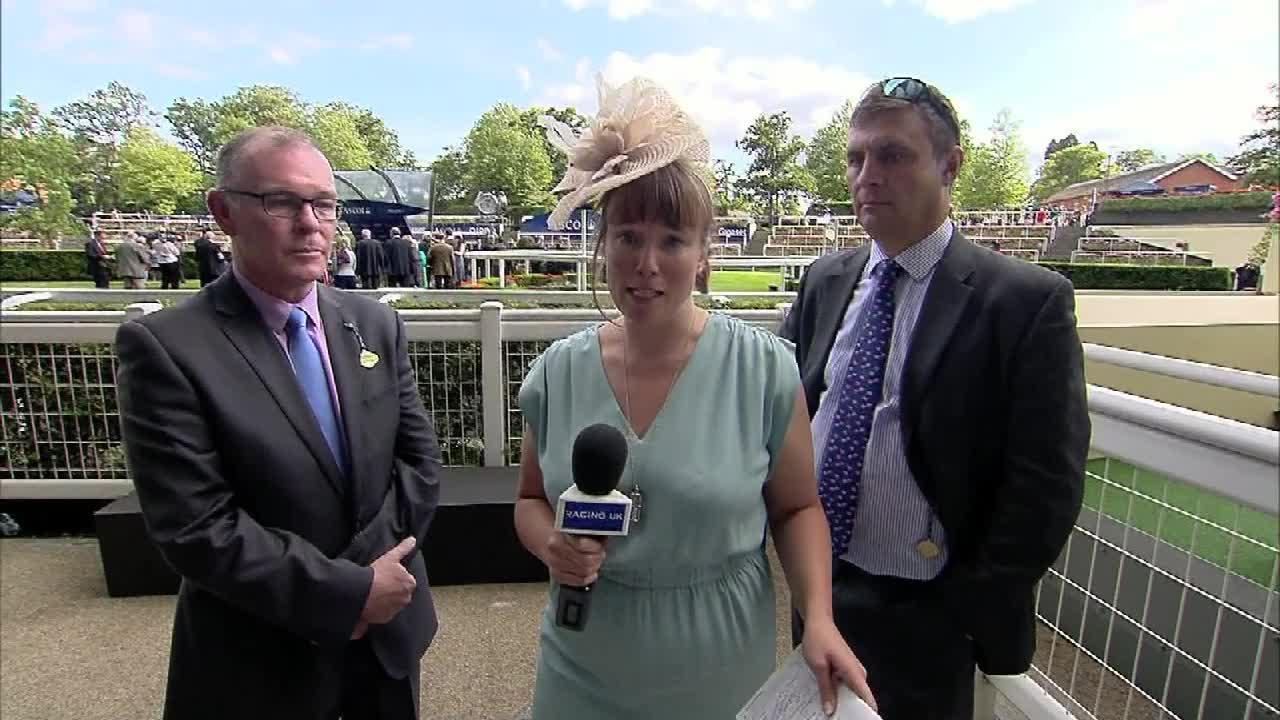
Jamie Stiers took to Racing UK to explain what went on, roughly. He refused to apologise. Not in his remit.

Here is the ‘decline to apologise video’ – this from the BHA’s head of regulation – so we should expect a polished performance. Instead it adds to the shambles by giving the impression even he didn’t understand the rules- or know what was occurring. ‘I am advised a rule 4 should have come with the withdrawal of the favourite’ – this is a staggering remark. I believe my 12 year old knows this one! As head of regulation he clearly had to have the rules of betting explained to him.

http://www.racinguk.com/news/article/36742/bha-to-launch-bid-inquiry

The stewards made enquiries and in their report they mentioned those findings would be shared with the Authority. Oh, I’ve heard this one before. The brush.

the official report from Ascot:-

The Stewards held an enquiry into the start to ascertain why SPECULATIVE BID (IRE), ridden by Jamie Spencer, failed to start and eventually left the stalls rider-less. They heard evidence from the rider and the starters. Spencer stated that the gelding was loaded late as he was known to be difficult in the stalls and just prior to the stalls being released SPECULATIVE BID (IRE) got his head over the adjacent stall 23. He added that when the stalls were released he was off the horse. Having heard their evidence and viewed video recordings of the start, they found that SPECULATIVE BID (IRE) was deemed not to have started and, under Rule (B)10.5, ordered the gelding to be withdrawn.

The Stewards further enquired into why the Weighed In signal was given before the enquiry into the start of the race had been concluded. They heard evidence from the Stipendiary Steward, the Clerk of the Scales and the Racecourse Announcer. Having heard their evidence they forwarded the matter to the British Horseracing Authority for further consideration.

Look, I can take a joke as much as the next man. I can easily accept errors are made. My problem with the Authority here is the abject lack of transparency, a failure to immediately apologise and take ownership of the problem. All businesses pay for their errors- except the BHA it seems. They want the bookmaking community not only to foot the bill, but take the flak, the assaults that took place on my colleagues, the inconvenience and the loss of face. In the meantime they will conduct internal inquiries and ‘move forward’. If moving forward is to set a precedent whereby we pay for their shambolic and ill informed stewarding – then I have one answer.

No

I’m sorry, but I’m tired of the simple lack of accountability for errors and the high minded attitude that comes with. Appalling race planning, 8 flat meetings on a Saturday in July, 3 jumps meets on a Sunday. Embarrassing integrity enquiries taking years to prosecute in which video of races are lost.The head of integrity is still in his post – headlines ‘we’re consulting ourselves into how we’re doing’. Yup. Race planning is for five year olds, yet its head sits in her chair. A general lack of consultation with the general public. The mundane press releases in the place of open press conferences like other sports in which journalists have an opportunity to test their performance.

I should say it makes me deeply uncomfortable to have to challenge the organisation. But I feel a clear need to defend my colleagues  even if the actual cost to myself is minimal. Let’s hope they behave in a manner befitting new management and the promises made by Nick Rust to come together. Here’s your chance Nick

Of course the BHA have registered successes – more so from it’s rather under funded commercial arm – REL. The Champions series, Qatar involvement, marketing on a shoe string budget. This leaves the authority actually responsible for planning, integrity and regulation. It lacks any clear authority over racecourses to the detriment of the sport – and everyone has a job for life.

Why?

I’m convinced amongst appreciable talent in the BHA are a few individuals without the necessary qualities to represent the sport. In every walk of life it’s critical for performance to be achievably measured. Failing employees and managers to be moved out and replaced with stronger people. And what’s with employing a board lacking in any appreciable experience in racing? So they can be bullied?

A line from excellent columnist Rich Lee – worth quoting –

“ ~~’Has there ever been a racing authority that was not incompetent, lacking in imagination and dynamism, or out of touch with the industry’s needs?’  Guardian racing writer Chris Hawkins…asked this rhetorical question in 1996.”  Plus ca change…!

In between times ‘Britain at the Bookies’ – little to say about this, rather dull if you’re not in betting- and feels like an advert for gamblers anonymous. Can’t help feeling this wasn’t a good idea

Goodwood. ‘Appointment with fear’ my Old Man used to say. A graveyard for bookies, some of whom are buried under Trundle Hill. Good news for the betting men with Hughesie retiring. He’s cost us a pretty sum over the years.. good luck to the legend in his new venture – a gentleman jockey.

goodwood

And so we trundle on to York. Another track with a sense of style. A possible meeting for Golden Horn and Gleneagles? On a strip of council land. If you want to get in free, climb under the gate at the ten furlong marker and look like you belong..

york_racecourse

Royal Ascot – 2015 – The Bookies View

www.geoff-banks.com/register.asp

Driving around Ascot is a pretty harrowing experience- streets full of burnt out Bentleys. Every once in a while you’ll pass a Waitrose, and really know you’re in a bad area.. they don’t do Tesco here – no matter what they make (? insert amount ??)

.
The trick to Ascot is finding somewhere convenient to park- there’s an exit one way system which sends you back to Sunninghill (a mile away) via Biddlecombe (286 miles away)-  You have to know the system or you’re stuck in the High Street for several days

.
Flick knives and knuckledusters  dutifully handed over, you’re greeted by throngs of gatemen. First thing you notice is how polite they are, they check what socks you’re wearing and smile. You see, at Royal Ascot- everyone feels like a Lord for the day – even if you’re entirely potless. Bookies enter with money, – they’re x-rayed on the way out to ensure they’ve left it all with the punters..

bar 3
One enters the truly vast terminal- had it’s detractors when it was built, but these days thanks to ‘green fingers Barnett’ – the place resembles an advert for house and garden. Full of comfy armchairs- nooks and crannies to enjoy your glass of champagne. Uber civilised.Quality extends to every enclosure, a track run by toffs- but to everyone’s benefit – no enclosure escapes the personal touch – and you can escape the beer swilling hordes if that’s your bag

.

They don’t do Pomagne here!

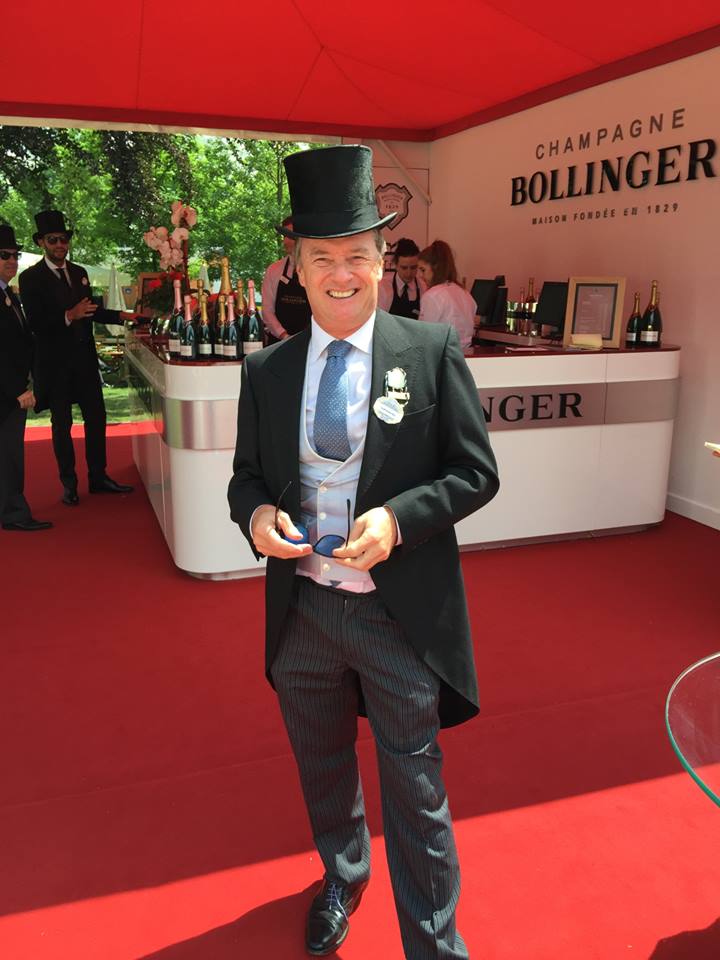
bollinger
And yes,  they actually serve a bottle of champagne in an ice bucket, not a bag, and with a glass should you so desire. You see, if you’re not at Ascot, York or Goodwood, where they do things with panache- most tracks think you deserve a bowl or tumbler to drink your champagne from.  Odd sort of business plan for your best spending customers wouldn’t you agree? Ascot hasn’t dipped standards to the banal trick of hiding customer service values behind health and safety.  .

.
Ascot also don’t do themed evenings for people dressed in football shirts..possibly because they take the view their long standing real racing fans might object to spending their days with Yah Yahs..

.
But I digress

.
When they rebuilt the old Ascot – some of the members said they’d never return. Well I suppose if you’re pushing up daisy’s and by extension possibly not reading this – that could indeed be true. For the rest of the ‘I’m never going again’ mob – it appears to my inexpert eye, that Ascot have built one of the world’s best sporting arenas –  outstanding restaurants, bars and service. In a racing environment obsessed with sand , it’s refreshing to walk into an Ascot or York where the focus still remains what goes on around the track – not (perhaps) in a betting shop.

bar 2
I spot Nick Rust, the new BHA chief exec in the throng – clearly his suit was made for someone bigger – he’s chatting to someone about ‘coming together’. I wonder idly if he’s explaining why they dug up Newcastle to create a terribly interesting series of races in a straight line. For this week though, exceptionally and perenially, we have the best racetrack in the world.

.
The first race rolls around – there’s a lump from Hong Kong – ‘Able Friend.’ Our Gallic friends have sent over a Goldikova clone. Most bets are in euros, as the far east specialist proves more suited to racing at the back. Solow wins well and Maxine Guyon flicks a V sign at the toffs as he passes the post. I don’t blame him. The bookmakers rename the winner ‘Sorrow’

.
The rest of the day degenerates into the stuff of nightmares for the bookie types as the Festival lurches from Prince this and Queen that . If it’s not the favourite, it’s the galactically talented Ryan Moore sweeping the board. That won’t go down well on the High Street.

solow
People that know me understand I’m one for speaking plainly. I have listened to several respected scribes eulogising on about the rather evident talents of Mr Moore. Little question he’s probably the most talented jockey we’ve witnessed on the flat. It goes along the lines of ‘isn’t he magnificent? What a rider! And to those that know him – apparently quite a wit’

.
Well, to the rest of us, who’d rather a jockey smile when he nails a Derby – he’s a thoroughly morose character – he doesn’t endear himself – nor promote the sport that makes him several millions in any way, shape or form. So no, I don’t find him admirable as a human being. Two weeks ago, we saw a brilliant horse take a Derby with a pilot who will do more for headlining the sport than Golden Horn himself. Leaping out of the saddle and engaging the crowd. That cost me a rake, but I smiled when I saw it. That’s what the fans want – not the taciturn one. He’s for betting – not for Racing. Shape up Ryan! Dettori, McCoy, Hughes, Walsh amongst many happily give of their time –  you can’t manage a smile??

.
When you look at the results, you could easily conclude they didn’t look that bad for the bookies, but I suppose it was the combination of several favourites going in – and if they got beat, it was either Moore or Dettori on top. Thursday I think was the most entertaining betting day – with Moore bashing the firms with a 14/1 opener followed by a 5/1 winner. Payouts could potentially dwarf the Mullins quad at Cheltenham.. (Thanks Annie)

ap
One major off course layer went into hyper drive sending nearly a quarter of a million back for Kingfisher in the Gold Cup- all those 10p accumulators, at guaranteed odds, I expect suddenly come to haunt. This time it was Maxine Guyon to the bookies’ rescue as he held Moore on his inside – causing him to switch paths at the critical stage. For me the week’s unlucky loser. For the major bookie involved- several pence retained on their share price. I expect they were not alone in hiding under their sofas as Kingfisher turned for home..

Racing festivals haven’t been that great for the firms over the last few years. Most lead with fabulous offers and price boosts created by their marketing departments. Combine that with a dip in on course margins – polarisation of expensive horses shared by a select few jockeys and trainers, and you have a problem for those betting on the product. Expect you’re reaching for a Kleenex right about now

.
Racing starts every day with a race for the Royals from the mile start in their fancy carriages. Now I’ve watched this for more years than I can remember- never once has anyone tried to pass the one in front. Surely I can’t be the only one who’s spotted the biggest bunch of non triers in racing?? Fair enough, they put on a good show, the whole event surely organised to give the bookies another betting heat to do their brains in – namely the colour of the Boss’s hat. But I’d like to see more effort from those in behind..I know I speak for all concerned who back the second carriage every year

carriages2
God save our Queen..you won’t see a pageant like that at Goodison Park..a uniquely British summer scene.

.
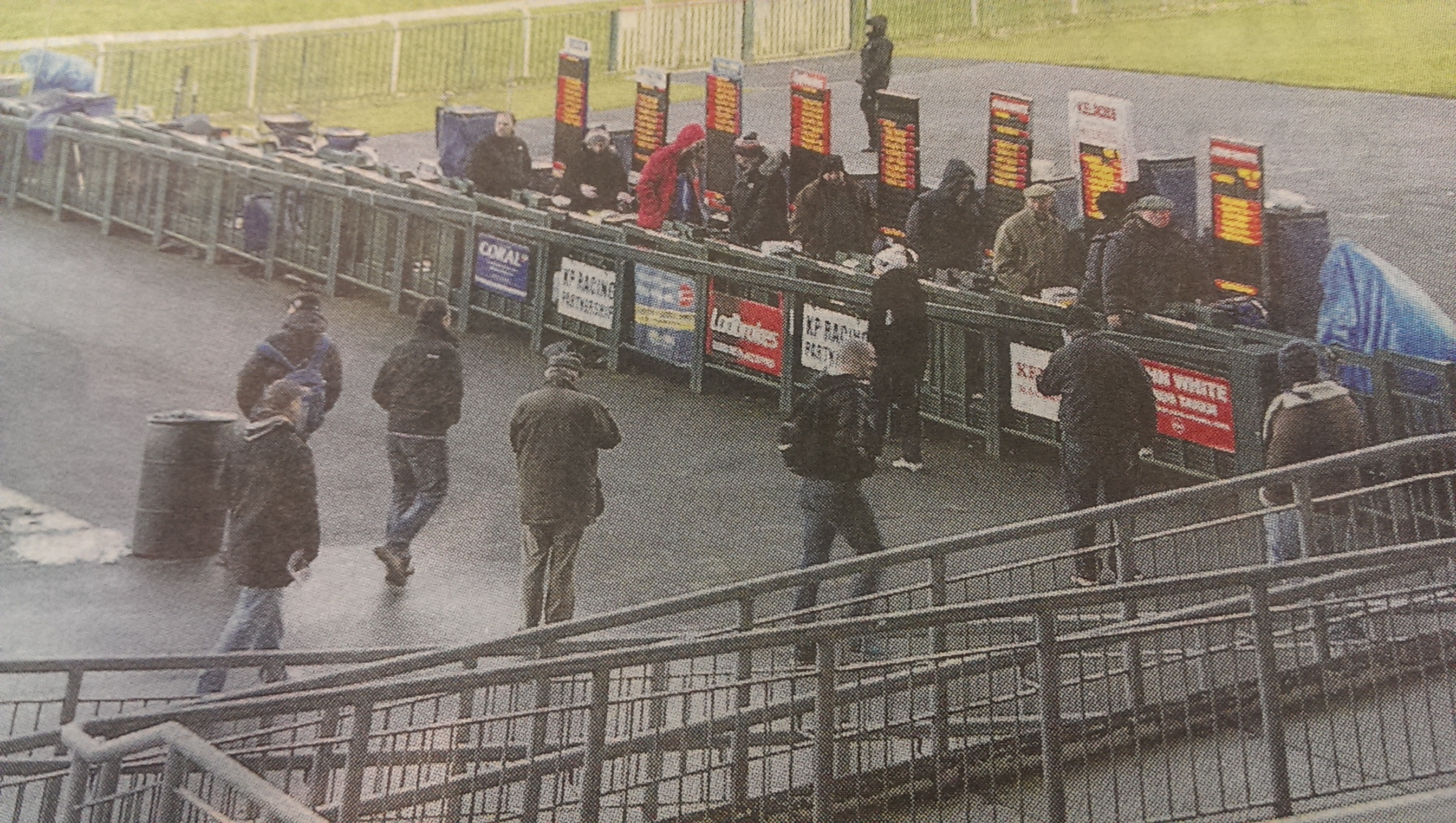
I took one wander down from the Royal enclosure towards the Silver Ring. Ascot is so vast, the silver ring is nearer to Egham. As enclosures go, it’s really quite well turned out. I walk as far as is possible before the waft of chips overtake that of Chanel.. There are bookies all the way down the racetrack, making noise, taking bets. I wonder what will happen to the very flavour of racing when the tracks inevitably take over the betting. Don’t think we don’t know what you’re about, with your expansive plans for data charges etc etc – we’re on to your tricks!

.
Racetrack bet however, could do well at the festivals, I don’t think the punters are in any way price savvy, we know that from Chester – they just want service. But the diet of midweek racing we’re fed by tracks-horsemen-BHA, has leant itself to poor attendances from both customers and bookmakers. What’s the future without the ring? My dream we wake up before it’s all too late – the major betting firms have deserted racing for football and roulette. I suppose then the sand will go back to the bunkers. No Big Jim, Barry Dennis, Victor Chandler

royal ascot betting
Imagine a world where an exec at Channel 4 suddenly decides the network should quit racing, in the face of the often ridiculous criticism of a show affording the sport 44 cameras and the best coverage it has ever experienced. By comparison the BBC with its almost ‘cottage’ coverage. Racing feeds the network a diet of 5 runner group races almost weekly and wonder why the numbers are down- then makes it awkward for them to show alternate meetings in its coverage and ignores Channel 4 in any decision making processes at the highest level. Remember,  they can make more money for less hassle from ‘Everyone loves Raymond.’. Don’t think the BBC will come back to save Racing from itself – they barely mention the National

.
Racing has an awful lot invested in very few options. Royal Ascot is amazing, but if Aston Villa play Scunthorpe it’s likely to pull in more sponsors, viewers and press coverage. The next few weeks Racing will go into its shell from Sunday to Friday, bang on 7 meetings on the Saturday, and bolster attendances with pop concerts and a grotesque obsession with selling as much beer as possible. Hmm, get back to the Racing. Ascot leads for me with the right balance and never loses sight of its focus on the Sport

.
It’s not supportable, but with a regulator fascinated by commerce, rather than how is the sport best served and gels together, – a board of novices to do as they’re told? As Nick Rust so accurately describes- the underlying trends are declining. He’s just not going to do anything about it. Sorry Nick, I don’t do sound bites. I did enjoy your BHA seminar though, with Rod Fabricious harking on about artificial insemination.. not sure who he wanted impregnated though..

.
Fortunately there’s enough quality in York, Goodwood, Cheltenham, Chester and Ascot to name a few to keep British Racing at the very top of the world order, British racing has a unique calendar of major Festivals. I wonder if there’s an RCA man reading this, sympathetic to the view most racetracks are struggling with an identity crisis? A racetrack, a greyhound track or just a vast pub. Here’s one to mull over – try proper segregation of long standing racing fans, who don’t feel to have beer spilt over their girlfriends, or even the often threatening environment, from the oiks that do, – rather than selling all in sundry a pass to the members enclosure, keep some areas with civilised folk in mind. Possible? I think also a lot of racetracks need to integrate their thinking with the words ‘social responsibility’ rather than ‘sales’

.
Early evenings at Ascot are spent gate crashing car park parties and pretending you’re one of the owners. Everyone standing quaffing champagne, leaning on their Astons, in an age old and endearing slice of the great meeting. It’s my time to get asked by people stuffed with my cash, how much I’d won that day.. (where’s that sharp knife?) Everyone turns up without being invited – ‘Who ARE you – and why are you stealing my champagne?’

car park
How good was the meeting? Well to my mind pretty outstanding. How does it compare to Cheltenham? Well they’re rather chalk and cheese. Ascot is very much more about the social scene. But there’s no loss in focus on the racing. Quipco have stepped in. There’s a new Group one sprint attracting foreign raiders that really works. It has management focussed on quality at every turn. Entrance charges to the meeting aren’t steep – considering what is delivered. Cheltenham has a different feel. Far more the betting event, with months focussed on it’s feature races. The two great events provide balance. Is it a bit toffee nosed? I don’t think so, sure the babies are on Smoked Salmon, and they tow away Ford Escorts, but one has to keep the Riff-Raff out 🙂

.
See you at York – could it possibly get any better?
ascot2

Response to SP regulatory commission

Response to SP regulatory system – consultation

Former NJPC chief exec Clive Reams,  recently penned a letter in response to the criticism levelled at the SPRC, after the Grand National, advocating ‘no change’ to the SP system.  When the current mechanism was devised in the 1990’s he argued vehemently against the then proposed system whereby 5 bookmakers could govern the SP returns – as ‘a bookies benefit.’

Of course he was at the time in violent disagreement with a system being proposed where the largest five firms produced the SP’s. And of course he would have been right. To permit those same firms to control the returns, when their off course empires were of such high worth in comparison to a veritable ‘cottage industry’ – would clearly disfavour punters. Any notion of those same organisations using their on course positions to actually bet competitively – and disfavour their huge shop and mobile empires, would have been nonsensical.

Yet now, we see that same official arguing in favour of the current mechanism. Despite the fact that same system has been modified several times, to permit now as low as three trading on course bookmakers, not only to provide an SP, but importantly the shows, otherwise known as board prices

Mr Reams hasn’t been seen in the betting rings for many years to the best of my knowledge.

It’s my conviction the SP mechanism – in its current form, was practicably out of date shortly after its inception and requires thorough modernisation. Not abolishment.

The commission, in its call for responses to the system, makes clear it supports little to no change to the system. That we are afforded a workable and simple mechanism, which provides for such as guaranteed odds against SP. Why the commission feels ‘board’ prices would disappear in any revisions is beyond my understanding. Perhaps to scare people into the false belief that show odds would be consigned to the bin.

We already utilise industry odds in some meetings – Meydan and Longchamp for example. There’s no argument to support the commission’s assertion a system based on track bookie’s odds- is the only one which would support guaranteed odds

It’s rather apparent the SPRC depends upon the advice and views as reported by the press association staff, tasked with returning a fair SP from the racetracks. They are neither witness nor party to discussions between bookmakers – and their customers. Their honesty is not in question here- but they clearly cannot have the ground level experience to report accurately what is really transpiring.

The commission will also consult with the FRB, namely Robin Grossmith for his advice. Whilst Robin is a respected colleague of many years’ experience, it should be remembered that an important part of his remit is to secure payments for on course bookmaker’s data. He would naturally argue the system as working in a satisfactory manner – and without any knowledge or understanding of how the mechanism, currently being employed, affects off track companies. Most track firms care little for the impact their activities have on the wider betting community

The dynamics of betting have fundamentally changed in the last 20 years, whence the current system was put in place. In that time changes have been few and limited in nature. 20 years ago a pitch at Sandown at the top of the rail would have been worth well in excess of £100,000 – and very hard to come by. These days – those same pitches can be purchased for less than a third of that value- and with minimal interest, most certainly not from someone trying to get into racecourse bookmaking as a career! In the same 20 years- the average turnover per race to on track firms would have declined to not less than 1/6th the value of the late 1990’s. Midweek racing has declined in interest to customers to attend. Rings are often ghost towns. Few punters turn up, and in a cashless society they have less to spend with bookies trading. Mobile betting apps have taken over – being more aggressive in nature, easy to use, from funded accounts and related to offers. Racetracks have taken over betting at some tracks –and this new competition to the business a track bookmaker is afforded will have significant impact on their very existence.

My average midweek turnover, as a leading layer, in strong betting positions, is now routinely less than £500 a race- if I bet in any way sensibly. A risible figure. For this reason I rarely attend midweek fixtures. Nor do many of my colleagues. The only way to buck such turnover figures is to exceed exchange odds, then to risk arbing from other bookmakers. If a bookmaker does not offer a pure exchange price on a ‘fancied’ runner- it’s difficult to field any appreciable money for it

Bookmaker numbers have been shored up by some firms operating multiple positions. One bookmaker (John White) operates three positions at Kempton – a small ring as you are aware. Kempton – for example, routinely operates with a sample of around six firms – they are providing prices for a huge off course industry, from a venue where few punters turn up to bet

At the same time as this decline has been evidenced- the off track firms have increased in size, technology advances, and power. Where once betting rings were vibrant and busy, with standard place terms, minimum lay to lose guarantees – and by extension a useful ‘guide’ to SP’s – now they are ripe only to cheap manipulation of their odds. Huge multi national betting concerns can control a weak market with veritable pennies. This imbalance would simply be outlawed in any other financial sphere. It is important for the SP commission to give this point full consideration.


VOLUME OF RACING

Since 1995, and importantly in the era of Peter Saville at the BHB in 2005, the volume of actual meetings has soared from around 1000 annually – to 1450 currently. Racetracks have also focussed their business more towards Saturdays and providing cheap funded product. This has had a thoroughly negative effect to the turnover on track and split the punters interest between meetings. Further a customer can now sit at home and watch either ATR or RUK on his satellite – even watch live streaming racing on the likes of Bet365. All have had an entirely negative effect to bookmakers on track. In the same period the expenses of running an on course business have soared. Many bookmakers have quietly retired from the ring

RACECOURSE DATA TECHNOLOGY

In the last 20 years or so most firms now utilise software provided for them by RDT. The build of their system and its layout is specifically designed to facilitate easy wagers to and from exchanges. A wager can be practicably negotiated faster than on a web browser, a whole set of prices backed, or an entire position closed out. RDT receive a commission from Betdaq for such activities. Such software did not exist in said advanced form when the SPRC devised the mechanism in the 1990’s. All bookmaker software on track is designed to facilitate wagers with exchanges. It has caused a sea change in how bookmakers engage in business on track. They differ from their off track colleagues in that instead of being viewed as traditional ‘layers’ – balancing books with real money, they have metamorphosed to ‘traders’

TRADING

What should also be considered is the wholesale change in the approach by on course bookmakers to betting. When the mechanism was put in play, the majority of firms were traditional in nature. That is to say they were in the business of framing a book and accepting risk. This has fundamentally changed. The vast majority now ‘trade’ many wagers away with exchanges to create margin and keep risk levels low. In order to engage sufficient liquidity to make this practice work – prices must virtually mirror those available on exchanges. For example – a firm will typically offer 4/1 a horse for any variance on an exchange from 4.9 to 5.4. If the operator is lucky, he will be able to trade at 4/1 and hedge at 5.4 – bookmakers have become the new ‘arbers’

There’s little discernible difference between ‘show’ odds and exchange odds for the more fancied runners

Off track firms are, by extension, accepting wagers – and risk, on shows therefore based almost purely on exchange odds. This is a far from healthy system – and a central plank for lower levy returns – down over 50% in recent times. Most bets are accepted at board odds- rather than the more ‘protected’ SP returns. Off track firms do not ‘trade’ wagers in the manner in which on course firms do. To boot, since the shows being returned are up to one minute behind changes in exchange odds, off track firms find themselves subject to arbing from punters. This business is unprofitable and most bookmakers close accounts from those engaged in this practice. Such moves are unpopular and leave firms open to unjustified criticism.

THE STARTING PRICE

Let us consider the actual SP – in practice most track firms have stopped trading aggressively, or at all – it’s often too risky to bet to exchange odds and risk a sizeable wager which a bookmaker cannot trade, with the exchange, in the limited time before the off. Prices are revised downwards throughout the ring – or unavailable. Most books are structured and the operator is loathe to change it. Large operators, such as William Hill on course, are naturally particularly mindful to ‘bet well’ with one eye understandably on their important off course entity.  In my experience their returns are given considerable weight in any return. SP’s are, in practice, more favourable to the industry for these simple reasons.

There’s habitually a considerable difference between exchange SP’s and Bookmaker Sp’s

PRICE REVISIONS

It is common in circumstances to hear criticism of course bookmakers for failing to balance books by pricing up horses which they have not significantly laid, at times when they take substantial monies from legitimate hedging activity happening fast and late throughout the ring. Through the year we will hear many examples- the Grand National being a notable one, of an overround which disfavours punters betting at SP.

This is fairly easy to explain- since most track bookmakers are less ‘layers’ than  ‘traders’ . When they do catch late funds for a selection, they are far more about dealing with trading the wager profitably on exchanges. In the 1990’s – most firms would have been trying to balance their books by raising the prices of other runners to compensate, if you will. This is no longer necessary with the advent of betting exchanges and software dedicated to trading

Further, the notion that bookmakers should counter raise odds when there are often no punters to offer those odds to, is fanciful.

Finally, large entities sending money back to the tracks place their wagers as late as practicable, certainly never 20 minutes before the race for example. Again such practices, as in the likes of FOREX, would be viewed as questionable. Is racing somehow different? I am not suggesting they are not fully entitled to boss the SP’s, but there are issues of scale and timing.


SAMPLE SYSTEM

The current mechanism employs a bank of up to 25 firms at the largest meetings. At the lesser meetings it is exceptionally difficult to find 25 firms, betting within the commission’s guidelines, to return an SP. The SPRC has revised the number of bookmakers required to return an SP to below the level which caused such upset between the NJPC and the commission in the 1990’s, when 66 questions were tabled on the subject The commission has also modified what it permits to return a show to below the accepted industry standard terms and without requirement for a minimum ‘lay to lose’ figure.

At York’s Dante meet recently, I was one of only six firms in the whole ring, to offer an industry standard ¼ the odds a place in two 16-21 runner handicaps on one day, whilst the rest of the ring were legitimately offering a 1/5th. A bookmaker betting to a fifth in said instance could offer 25/1 a horse – whereas I would only be able to offer as low as 16/1. How does the commission handle such anomalies? Or where the favourite is odds on and all but a couple of firms are betting win only? Once again the sample is nowhere near that required for a fair SP, nor takes into account it is supposed to mirror standard terms off track to be seen as accurate – that is if there were appreciable monies to bet to. There are many examples of such cracks in the system throughout the year, which would not be evidenced if we had a system properly balanced by the true weight of money wagered on a race

We are of course well aware that the Grand National return in no way accurately reflected a fair return. Whilst I would argue that 1.66% per runner is by no means excessive- the truth remains the show embarrassed bookmakers on course, and will lead to customers choosing not to wager at the racetrack at all. Many firms were offering 9/1 the favourite – which was returned at 6/1- at the same time the exchange was offering 14.5 on Shutthefrontdoor.

The simple fact is the use of ‘SP Samples’ as a methodology for returning prices (especially where 5 of the 25 firms in the show represent major off track business) is clearly far too easy, and inexpensive, to control. In practice it’s fairly evident who the firms are that are part of the sample

Bookmakers not included in the sample are routinely ignored. Bookmakers within the sample are often asked to accept wagers at less than the odds they are currently displaying. Particularly at small meetings. Is there clear and incontrovertible evidence that this goes on? No. It is however, quite routine to be asked to ‘co-operate’ on shows in return for the crumbs off of a large concern’s table. If you co-operate – you benefit.

IS this system of hedging fair? Not if a wager is proffered ‘with hooks’. Any discussions with other firms will confirm this is precisely what goes on. It is totally acceptable for a large concern to wager to control a price which reflects the full weight of money. But not where said concerns can control a the market for such a tiny outlay and by openly requesting the bookmaker to cut his odds in return for a nominal wager.

WEIGHT OF MONEY

What should concern the SPRC, is the effect on a fair mechanism of such large concerns wagering with such a tiny entity as three to eight bookmakers trading an all weather track for example. What also should engage thinking, is the possibility of manipulation of weaker exchanges on small markets. Especially when one considers RDT controls well in excess of 90% of on course firms and produces software designed specifically to encourage the practice of trading. In reality, it is Betdaq- the weaker exchange of two, who govern on course returns. In my view this could be viewed as a cartel. It takes a tiny movement of exchange money – typically less than £10, to be followed by several on course layers.

kempton

INDUSTRY PRICES

Why have off track concerns not called for control of their own SP’s to date? Two factors explain this anomaly

First, and rather obviously, where the SP itself is required to be revised downwards, it can be easily controlled in a market devoid of regular punters with a very small ‘hedging’ fund. Large concerns represented on course can constitute up to 50% of those available to govern an SP. Especially as the SPRC mandates that in the strongest rings at our festivals, only up to 25 firms are required to return the show. Hedging can therefore be restricted to just those firms. This is precisely what occurred at Aintree. Indeed one pivotal operator, running multiple pitches, informed me ‘where he was in the sample, he was 6/1, – where he was outside the sample – 9/1 about the favourite’.

If all operators are betting to the same commercial terms – there’s really no need to limit the number who return an SP, and it’s clearly a system which fails the means test in such areas.

Second – what concerns major operators off track, when one considers the issue of industry odds, is how their competitors would behave were the mechanism revised. Would, for example, an aggressive operator such as Paddy Power- buck the general acceptance of a new industry return by producing its own ‘enhanced’ SP. As things stand currently – everyone accepts the status quo, warts and all. Of course most firms would prefer an accurate industry SP, not based on exchange odds on course, but the elephant in the room remains their competitors

With the disappearance of John McCririck from television schemes – a major obstacle to industry odds has been removed

OVERVIEW

Centrally the landscape of betting is unrecognisable – were we to compare it with 1995.

The SP regulatory commission is recommending we keep a system where the ‘show’ odds for fancied horses directly mirror exchanges and where the SP is ‘protected’ by circumstances. Where small time traders – desperate for any bettors can be easily bullied by larger operators and where punters feel they are being cheated (unfairly) by track firms.

We are long overdue constructive change. I welcome this consultation

Proposals.

  1. On Course bookmakers to compile one fifth part of a new mechanism, only where there are an absolute minimum of 25 separate entities available to return an SP
  2. Those 25 firms must be betting to recognised tattersalls standards in every race they are engaged to return the SP. Modified terms can not be accepted
  3. At least 25 firms must be available offering a full each way service to return an SP
  4. Sample system to be totally abolished on course. All firms betting to standard tattersalls terms to be included in the returns
  5. Track bookmakers who wish to include their data in any new return, must undertake to lay any advertised price to a minimum of £100 – to include to other operators.
  6. Four fifths of the new mechanism to involve the 19 largest operators. These operators to include Betfair and racetrack bet
  7. Betfair’s SP can only be taken from their each way market
  8. Industry odds governed by weight of money and by provision of prices to SIS
  9. SPRC to consult with operators to produce a formula which most accurately reflects an operators liquidity – and therefore influence on the SP

Geoff Banks

10 June 2015